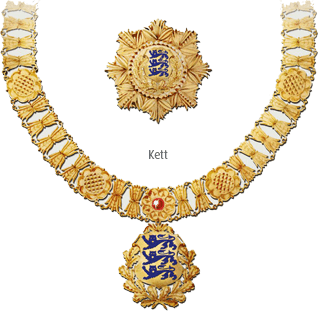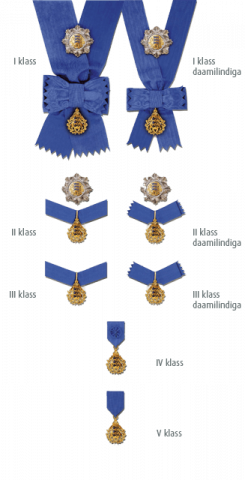
The Order of the National Coat of Arms
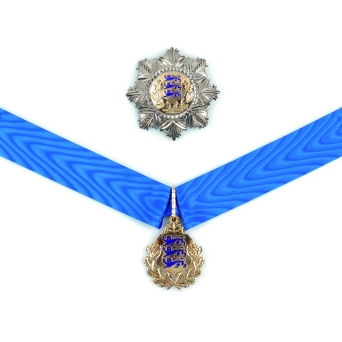
The Order of the National Coat of Arms and the Order of the White Star were established by decree on 7 October 1936.
The design of the Order of the National Coat of Arms was created by the artist Paul Luhtein.
With the establishment of state decorations and the conversion of private decorations into state decorations, the question arose as to whether this was consistent with the Constitution, which prohibited the awarding of orders and decorations to Estonian citizens, except to members of the Defence Forces during wartime (§ 7).
In the explanatory memorandum to the law, Minister of Justice Johan Müller argued that Section 7 had to be interpreted in conjunction with the preceding Section 6, according to which all Estonian citizens were equal before the law and there were no estates or hereditary titles.
Since the holders of the newly established decorations, unlike recipients of former Russian imperial orders, were not granted any class-based privileges, and were in the same position as recipients of commemorative badges, honorary diplomas, and letters of appreciation, the establishment of these decorations did not violate the principle of equality among citizens.