TURNING and turning in the widening gyre
The falcon cannot hear the falconer,
Things fall apart; the centre cannot hold,
Mere anarchy is loosed upon the world,
William Butler Yeats
Slowly, ever so slowly, we are realizing, or at least should be, that the fundamental re-ordering of Europe that began with the crumbling, collapse of an overextended and unsustainable communist glacis in the late eighties of the past century has had far greater and far-reaching reverberations than we then would or could have predicted. The gyre widened farther, its unseen subsurface perturbations deeper than we realize even today, buffeted as we are by those changes. We see only the immediate past, the proximal cause for the calamities about us, post hoc, ergo propter hoc, not the longer term progression of events. While the simple linear belief that X leads to Y, that the toppling of primitive, unsustainable despotisms in the Eastern part of the European continent would make everyone collectively slap their forehead, “Ahaa! Now I get it, liberal democracy and open market economines are the way to go”, we realize, or should realize, that it would not all end with merely that simply, as the end of history.
Soviet-style Communism, even in the short run an unworkable form of despotism since its imposition in 1917, remained so through its iteration by military force and occupation in Eastern Europe in the 1940s. We know that crony capitalism leads to economic busts but crony communism never really even gets off the ground, just seedy privilege – bigger bad cars, better bad health care, better bad education for the children of the well-connected justified not by achievement but by self-appointment to bring about a more radiant future, because only the self-appointed Party is capable of giving hope of a better future. We will shortly meet this phrase again.
Deng Xiaoping realized already in the late 1970s, a decade before the collapse of what by then was simply a Soviet khrushchovka of worn-out cards that a society or a country cannot borrow on the future, that productive creative labor is what needs be allowed and that privelege without merit leads to soviet-style stagnation. Deng realized social stratification based on party membership, not on accomplishment was unsustainable and proclaimed: “It is glorious to get rich”. He didn’t say, Nota Bene, that it is glorious to have free speech and free and fair elections. China realized it needed to change and embraced capitalism without democracy. Moscow was more obtuse, at least until the second half of the 1980s.
In the West even fewer got it, telling itself East Europeans really liked to be enserfed, and for most of my adult life, I found that people in the West actually had come to believe it. Happy Estonians building the Baikal Amur highway, wholesome Polish plumbers, tanned Lithuanian kolhozniks bringing in the sheaves somehow lulled people into believing it was “an alternative”, a different way to do things toward which we too would move in some kind of utopian convergence. But then Communism collapsed and Western Europe was faced with its “Oh-oh, now what?” problem with all those poor cousins at its doorstep and no more barbed wire, wall or indeed any other kind of entrance. A continent of exiles – people who talked about Communism just the way the excoriated “emigrés” from the East had been talking, unpleasantly, uncomfortably for all those years. And even those who didn’t buy the convergence myth or the silly CND line about Russians loving their children too and therefore Moscow harbored no ill will toward the West and maybe for them freedom of speech is just another term for nothing left to say, were stung.
For fifty years since the Atlantic Charter we – East and West – who didn’t believe it was all OK, believed the rhetoric that we would all be one were it not for the evil Soviet Union and its lack of democracy, that we could redeem ourselves from the graceless half century by working hard, speaking free, by following the rules and doing our homework. That Western Europe yearned for us as we yearned for them, like Aristophanes in Plato’s Symposium, two halves of a whole split by the gods, perpetually seeking our other half, to line in a Europe, whole and free.
It turned out to be much more complicated. With the end of Communism it was time to redeem those bonds and vouchers of the ideologized 40s, 50s, 60s, 70s and 80s. We discovered that to Western Europe the liberation of enserfed and silenced Easterners turned out instead to mean “social dumping” by Polish plumbers in France, and “lazy Latvian” construction workers in Sweden, and in our case – to believe some Finnish newspapers from as late as Spring 2011, “criminals from Tallinn” disembarking each night in Helsinki harbour by the hundreds; or, the expression I heard in Munich already in 1990 from my Hausmeisterin after my bicycle was stolen, Heute gestohlen, morgen in Polen.
Liberation and what ensued turned out to be a conundrum expressed in the German Wessie’s pride: “Look at all I have accomplished through hard work” and the Ossie’s bitter response: “You were lucky to have that opportunity”. Except now we in the East who took the exhortations to frugality, discipline, hard work and following the rules, have discovered that while the West German truly worked hard, saved and made his country a success, others merely borrowed and inflated their GDP through borrowing.
The view of Eastern “wogs” being the culprits in Europe’s difficulties is an attitude with amazing persistence. Its history stretches back centuries, it was resurrected with particular vehemence in the past twenty years and while we thought it would fade with EU enlargment, it turns out it is as robust as ever. Just last month (November 3 to be precise) Jean-Claude Piris, formerly legal counsel of the European Council and an “EU architect” as he is described, claimed in the Financial Times that at fault for all of the EU’s financial woes is the too rapid enlargement of Europe to include the formerly communist part. That therefore we need a two speed Europe, “because the EU cannot afford to be cast as a symbol of austerity. It must offer a broader political project, capable of giving hope of a better future”.
In translation, if you didn’t get it: what we Easterners call not living beyond our means, is not as important as to “offer a broader political project, capable of giving hope of a better future”. Don’t create real value, borrow instead; cook the books, lie to Eurostat, live off other’s frugality. It is justified. Just in the name of a “better future”. This is the kind of talk we heard in Eastern Europe for fifty years. To justify oppressing their subjugated subjects and their own priveleged lives, Communists spoke constantly of the Radiant Future, offering a broader political project (i.e. never mind the messiness, the petty concerns of the bourgeoisie), capable of giving hope of a better future. This radiant future, this hope, alas, was always receding. It wasn’t the Communists’ fault, though, that it didn’t arrive, it was the fault of Communism’s five enemies, the four seasons and international imperialism. Or saboteurs. Or bourgeois remnants. Following the same logic, is it today us, the East Europeans, that are to blame for the borrowing policies of some older member states?
As a child I would watch on my refugee parents second-hand black and white TV reruns of an American cartoon Pop-eye, a World War II era cartoon that seemed to have the primary message that eating spinach made you strong. A supporting character was a sad-sack whose only line, repeated from cartoon to cartoon sums up the attitude that led us in Europe to where we are today: “I’ll gladly pay you Tuesday for a hamburger today”. The EU as American cartoon sounds too brutal, given the responsibility-evading behaviours too prevalent on our continent today, brutal in that the too often caricatured Americans and their supposedly culturally imperialist mass culture in fact have in the Pop-eye character Wimpy, to quote Wim Wenders’s Kings of the Road, “colonized our subconscious”.
Of course, we need not impute to all of the EU what an “an architect of the EU” says, but we know from the housing projects and council estates that ring the city of every formerly communist country what bad architecture can produce. More importantly, we know how wide-spread this attitude in fact is. Unfortunately.
The question that arises is who will pay for Wimpy’s hamburger today? Or even Tuesday? The problem Europe faces in the oncoming winter is whether it can maintain this ever-receding dream of a radiant future and continue like first secretary of the Polish Communinst Party Edward Gierek to get its hamburger without paying on Tuesday, loans taken to make everyone believe they actually had worked for their hamburger, their improved standard of living? I am particularly concerned by the chorus of whispers that financial responsibility is a threat to democracy, that the democracies in some countries that have to undergo severe fiscal adjustment cannot withstand these calls for financial probity. That, as the architect implies, democracy in Europe is something that others must pay for, an attitude repeated in obcene caricatures of Angela Merkel bedecked in a swastika.
It strikes me as especially odd that anyone should be speaking of too rapid enlargment. We Easterners will not be, if the Commission’s current plans for the EU’s next Multiannual Financial Framework remain, even equal before 2028, a quarter century after enlargement in 2004. Today countries like mine or Poland have been in the EU for as long as Sweden, Finland and Austria had been when we joined. Yet no one referred to them then as “new” members. Discussion of the reforms to the Common Agricultural policy where in a Single Market where everyone pays roughly the same for tractors, fuel, seeds, pesticides and feed, “old members” currently receive three to six times as much in direct payments, we might, I stress the word might, be treated equally, i.e. as no longer new in 2028.
NATO was was created within a year of its conception. The European Community Treaty was worked out in a year. Still, that pace was glacial compared to the creation of the Marshall Plan, which mobilized to inject 2 to 3% of U.S. GDP into Western Europe. I mention these facts just to bring out the persistence of the East-West divide within the EU to this day. Not because it is obnoxious, which it is of course, but because it is redolent of rearranging the deck chairs on the Atlantic.
II
The foregoing discussion has one fundamental flaw: it is far too eurocentric, it does not take into account everything else that is changing no less rapidly than the collapse of confidence in the ability of profligate European states to pay back the money with which they financed their borrowed prosperity.
For what else has changed in the 20 plus odd years since the collapse of Communism in Eastern Europe? Today, China’s becoming the largest economy in the world is already in sight. Already that small percentage – let us be conservative and say 10 percent – of Chinese enjoying a Western standard of living make up the size of Germany and France combined. Also generating real, i.e. non-resource pillaged-based growth, that should cause growth-envy in Europe are Brazil, India, and Turkey.
The rise of China, however, has had one profound impact too often ignored in discussions that focus narrowly on the economic importance that country: Europe’s relations with the US, the principal political and security partner of Europe since World War Two. For much of these past seventy years (or at least after the end of the Marshall Plan), the US has been Europe’s foil, the contrasting “other”, a counterpoint with which to distinguish oneself, set oneself apart from the crudities of Pop-eye and Wimpy. Jacques Derrida and Jürgen Habermas in 2003 even proposed that Anti-Americanism be the foundation of the beginning of a genuine European foreign policy (patronizingly chastising East Europeans for being so churlish as to support the US).
Be careful for what you ask for. For indeed we are getting it, a US receding from Europe, re-orienting itself to the Pacific. Re-prioritizing would be a more neutral term, but it is a withdrawal, a disengagement, a re-orientation, an abandonment of romance and idealism and a turn to realism, hard-headed and rational.
We Europeans all misjudged. European anti-Americanism for half a century among the cultural and often political elite was sustained by the implicit assumption of a permanent and hence easy to dismiss presence. They can be bashed because they would always be be over here. Pro-americanism, Eastern or Western, was simplistic, un-European, a sign that you were not quite right or a stooge (an attitude contrasted with the identification of pro-Communism with sophistication, that in some – but not all – parts of Europe faded after August 1968). Politicians forgot that national interest, contributions in troops, materiél and finances, not assumed commonality of values, are what sustain an alliance.
We here in Europe and even our friends, the trans-atlanticists in Washington, now realize that the US presence, its interest in us, was not a done deal forever. Indeed, now that it is drawing, or already has drawn to a close, it is crucial to realize that we were the most important partner for America. That when Henry Luce in 1941 famously declared the 20th Century to be the “American Century”, calling upon the US to abandon its isolationism and to defend democracy beyond its borders, these past 70 years in the US’s foreign policy have represented an uncharacteristically “European Century”.
From 1776 to 1917 the US assiduously avoided continental entanglements. As Robert Kagan points out in Dangerous Nation, his history of the first century of US diplomacy, the tradition was to avoid unless absolutely necessary, any involvement in the outside world. Trade yes, politics, no. Militarily only to defend narrow US interests, not ideas or ideology. Even World War I for the U.S. was a one-off involvement followed by a rapid turn inward and back to America’s long-term stand-offishness and non-involvement in European affairs. It was World War II that brought the US to Europe along with the implicit, often resented but always assumed commitment to be here and defend us and democracy. This American commitment was always implicit, not only in European decision-making but in the US’s own commitment to its security, in manpower as well as defense expenditures. Nowhere else has the US committed so much of its intellectual, economic and security capital as to Europe. First militarily in World War II, a commitment that continued throughout the Cold War; economically with the Marshall Plan, institutionally through NATO and politically at all levels, Europe has enjoyed the status of a privileged partner.
This, we must realize and face up to, has changed profoundly. Completely. It is a Shakespearean “sea change”. With twenty years since the fall of Communism in Eastern Europe, the generation of political leaders with first-hand Cold War and European experience has passed from the scene. Even for those for who Détente or Rollback represent more than textbook terms, the period from 1989 to 2004 was a “mopping up operation”, tying up the loose ends. As one would expect: after 50 years of struggle against totalitarianism in Europe it would be expected that it would take another 15 or so to get the Eastern part of the last erstwhile Atlantic Charter countries, the ones it took a half century to liberate back in the democratic fold. NATO expanded, the EU enlarged – basically to Europe’s pre-war more or less democratic lines – and the US genuinely could say in the immortal words of George W. Bush, “mission accomplished”.
It is important to realize that from a US perspective “Mission accomplished” was precisely the case. Europe ceased to be a problem, or at least one the best and brightest in Washington lost sleep over. With China rising to claim its place as a superpower, replacing the ever less meddling, the more middling Russia; with Al Qaeda, the threat of proliferation of WMD and terrorists attacking the US proper, it was assumed that Europe would do its share. At least in its own backyard. Yet as we in Estonia have seen, with every conflict involving the West, from Bosnia twenty years ago to Afghanistan today, that assumption has been mistaken. Jacques Poos, foreign minister in the Luxembourg EU presidency famously declared in 1991 before the Balkan Wars, “the hour of Europe has dawned”. In Bosnia and Kosovo, Europe required U.S. leadership to resolve the crisis, we needed Richard Holbrooke to orchestrate the Dayton Accords. We went in to Afghanistan only when the US decided we needed to. We cut back our defense expenditures, we scaled back our militaries. We came to believe that Immanuel Kant’s Perpetual Peace had been achieved in our lifetime and never thought back to who else in Europe had thought so too.
Europe got the US president it thought it wanted, believing for some bizarre reason that a black US President who had lived abroad as a child would be less patriotic, hence more “European”, more “multi-lateral”. Europe only now is coming to understand that Barack Obama is no less a custodian of US national interest than any of his predecessors, that he represents a long, very long tradition. What Europe has not quite yet come to grasp is that Barack Obama is the first US president since Herbert Hoover with no real European or Cold War experience, personal or familial. This has nothing to do with Barack Obama, it is the result of a generational change, and a change in the challenges the US finds itself facing. When we in Europe come to understand this, we will also finally conclude as well that the European Century in the US is over.
One could see this, and some of us have, for some time already, but if there was any need for confirmation it is to be found in Hillary Clinton’s essay in the October Foreign Policy called “America’s Pacific Century”. Clinton is quite clear about why US national interests lie not in Europe but Asia:
“The Asia-Pacific has become a key driver of global politics. Stretching from the Indian subcontinent to the western shores of the Americas, the region spans two oceans – the Pacific and the Indian – that are increasingly linked by shipping and strategy. It boasts almost half the world's population. It includes many of the key engines of the global economy, as well as the largest emitters of greenhouse gases. It is home to several of our key allies and important emerging powers like China, India, and Indonesia.”
The US has other problems, real problems, and if they have one in Europe it’s that we don’t want to pay our part of our own defence or contribute the necessary manpower or equipment. In this valedictory speech to NATO this past Summer outgoing U.S. Secretary of Defence said:
“The demilitarization of Europe – where large swaths of the general public and political class are averse to military force and the risks that go with it – has gone from a blessing in the 20th century to an impediment to achieving real security and lasting peace in the 21st. […] Not only can real or perceived weakness be a temptation to miscalculation and aggression, but, on a more basic level, the resulting funding and capability shortfalls make it difficult to operate and fight together to confront shared threats.”
This, combined with a lack of a threat in Europe and serious threats in the Middle East, Central Asia and China means that we in Europe are not high on the agenda, the transatlantic relationship has no passion and as this trend continues, we will find we no longer have a real constituency in the Administration, Congress, media or public opinion at large in the one serious partner Europe has had in our historical memory. Of course we can always find a problem, if we try hard enough, that will get Washington’s attention. As a senior foreign ministy official from a large unnamed European country answered Estonia’s ambassador when the latter complained about a lack of attention to us: Machen Sie eine Krise.
We seem, I should add, to be doing just that right now with our handling of Europe’s financial crisis. The US has woken up to how dependent its financial and economic health is on what happens today upon developments in Greece and Italy. Like the financial and economic health of the heartily anti-Euro United Kingdom, the health of the US economy in our intertwined world is tied to the health of the European economy and the fate of the Euro – the number one agenda item at the US-EU summit in Washington between Presidents Obama, Barroso and van Rompuy (an event, alas, unreported in our own press but where decisions to co-ordinated action over access to US dollars resulted in the best three day rise in stocks since 2009).
Not all of this has a downside. Lack of attention also indicates that some things are not a problem. The de-prioritisation by the U.S. of Europe is not strictly a policy toward the European Union. Two primary objects of U.S. policy, respectively of the past twenty and sixty years, Eastern Europe and Russia too are taking a back seat as Asian threats and opportunities occupy ever more attention of America. All quiet on the Eastern Front, is more of a foreign policy weather report than a front-line dispatch; this we in Estonia can only consider a positive development.
III
That all said, I will return the proposition that we are in the midst of, in media res of an ongoing and fundamental reordering of the world in Europe. Which means that we can and indeed need to do those things that we have feared to do in the past. But to do so in a way that not only recognizes the opportunities to change but also the changes we see around us.
A primary issue here is the fundamental divergence in the EU between institutional arrangements and performance. With increasing talk of a “two-speed Europe”, a division between the EU-17 or countries using the € with the attendant treaty obligations and a slower non-euro periphery, it strikes me that the institutionalized, i.e. official treaty-based “Euro-group” is within its confines far more hetergenous than the EU-27; that within the EU-27 there is an altogether different and separate subset, a coalescence (if not coalition – yet) based on fiscal responsibility: low deficits, low borrowing, a willingness to make needed changes in policy to ensure competitivenss and sustainable growth.
I cannot be the only one to be struck by the glaring fact that the Nordic-Baltic-6, comprising two Eurozone countries, Finland and Estonia, and four non-Eurozone countries, Latvia, Lithuania, Sweden and Denmark, actually share much more in attitudes and choices than the Eurozone itself. All six countries are for sound spending and borrowing policies, all six have shown a willingness to do reforms. We who are in the Eurozone in the NB-6 have a fundamental obligation to ensure that the common interests of our neighbors are not ignored by the EU-17. Of course we in Estonia also anxiously await the EU-17 to become an EU-19 and an EU-21 with Latvia and Lithuania as well as Sweden and Denmark taking their place at the Eurozone table, which today is becoming an ever more important decision-making body within the EU. Moreover, Poland, outside of the eurogroup, follows fiscal policies more in line with the NB-6 and its eurogroup members than a number of euro-using countries.
Of course, our geographies and geometries are far more complex. Within the Euro or EU-17 there is a divide between (on the one side) Germany, Austria, Finland and the Netherlands, a hard-core of Triple-A, net-payer, €-countries, a second tier of Slovenia, Slovakia and Estonia, neither Triple-A nor net-payer (yet) but nonetheless sticklers for fiscal discipline and following the rules. On the other hand we find other countries such as Greece, Italy, Spain and Portugal that for a variety of reasons have failed to follow the rules. In between there are €-area members such as Triple-A France, Luxembourg and AA rated Belgium, net-payers (at least as of the next financial period) whose positions on fiscal discipline are somewhat more ambiguous. Finland’s European Minister Alexander Stubb has suggested a different “geometry” where political leadership in the Union would rest with the triple-A group.
All of these versions of “variable geometries” represent possible futures, none clear choices yet, each with a probability that can change dramatically with the fortunes of the Euro, the ability and willingness of countries even in the short time between this writing and its publication, to reform and enact necessary measures, that as we know from our own experience here, are necessarily unpopular, at least in the short run.
IV
We would not be in the mess we are in today in Europe if a large number of fellow member states had not taken a fundamentally different tack to thrift, deficits and borrowing than what was agreed by themselves only a couple of years earlier. My country would never, ever have been able to adopt the Euro had we done what was standard operating procedure among many members of the €-17. At the same time, I would aver that there is little in the fundamental approach taken by Germany, the Netherlands, Estonia, Finland or Austria that differs from what the non-Euro countries, Swedes, Danes and indeed the Poles have been doing.
Thus the institutional arrangements and the behavior of countries do not gibe. I submit this is unsustainable. For ultimately, the inability or unwillingness of parts of the €-17 to submit to agreed-upon rules will be defended by appealing to a position that “our democracy cannot withstand the kind of austerity demanded of us”. The first shoots of this position we see emerging. Yet let us be clear about what this means. It means that fiscally responsible countries will be asked to support fiscally profligate countries in the name of democracy.
You can do it for a while but if you are a country like Estonia, where the GDP per capita is almost the same as Greece but where the average salary is lower than the Greek minimum wage and where the pensions and agricultural supports within an internal market are three times lower, it is a matter of time before our voters revolt. The government in my country and the opposition voted to support EFSF for a country richer than us and profligate. Three quarters of the parliament voted in favor. But, Nota Bene, 75% of the population was against.
Here we see in my own country the first seeds of the populism that has recently caused concern throughout the North. In the Netherlands, in Denmark, in Sweden and most recently also in Finland. Sorry, it’s not just the democracies of the South that are under threat. The bankrolling of the South has already and ever-increasingly threatened the fiscally responsible countries, the ones who have shown solidarity and voted to commit to bailing out those better off than we. Moreover, while much has been made of the change of governments in countries that broke the rules, far too little attention has been made to what to my mind is a far more significant reverberation: the fall of a responsible, poor, new member state government coalition that made the hard choice and voted to support a country richer than it is, all for the sake of European solidarity.
That I submit is a problem, a serious problem and a threat to Europe we have only begun to realize and we still talk about New and Old members, we still talk nonsense about “populism” in all the wrong ways. Indeed I believe that the “populism”, and the “spectre of the thirties” that all kinds of pundits unknowledgeably appeal to, has nothing to do with the populism we see in Northern Europe. That is not a populism of the dispossessed, the unemployed. It is a populism more akin to what Calvin and Luther appealed to, not the fascists of the 1930s. It is, like most populism, based on resentment, and resentment at unfairness. But the unfairness is, as it was in the 16th Century, a resentment at those who flaunt their flouting the rules by which the others abide. Resentment on the part of those who take commitments seriously regarding those who do not. Is that Populism? Is that the “Spectre of the 30s”?
I cannot and will not accept any labels applied to Northern Europeans for being “populists” when they have been doing exactly what has been asked of them. The price of following the rules for a “poor” country like Estonia has been harsh. Yet if we subtract the fake wealth of the “rich”, the ones who today cannot pay their debts, who have borrowed their wealth, are they that much richer than we? If part of being European is playing by the rules, that is, following the Rule of Law, then how can “European Solidarity” ever take precedence over the rules? It is a tough one.
Estonia, I firmly believe, should not only do its part, it should be one of the more understanding countries regarding others with difficulties. Solidarity, after all, was what we were denied in 1940 and our belief in the need for European solidarity is what lies at the core of the Estonian belief in Europe. But for it to work – in Estonia, in Poland, in the other “new countries” who have been EU members long enough to be taken seriously – we need an end to categories that bear no relation to reality. Indeed, we should be among those in the forefront explaining that unless Europe understands responsibility there will be no solidarity, that there is no possibility any longer to promise to pay anyone Tuesday for a Hamburger today.
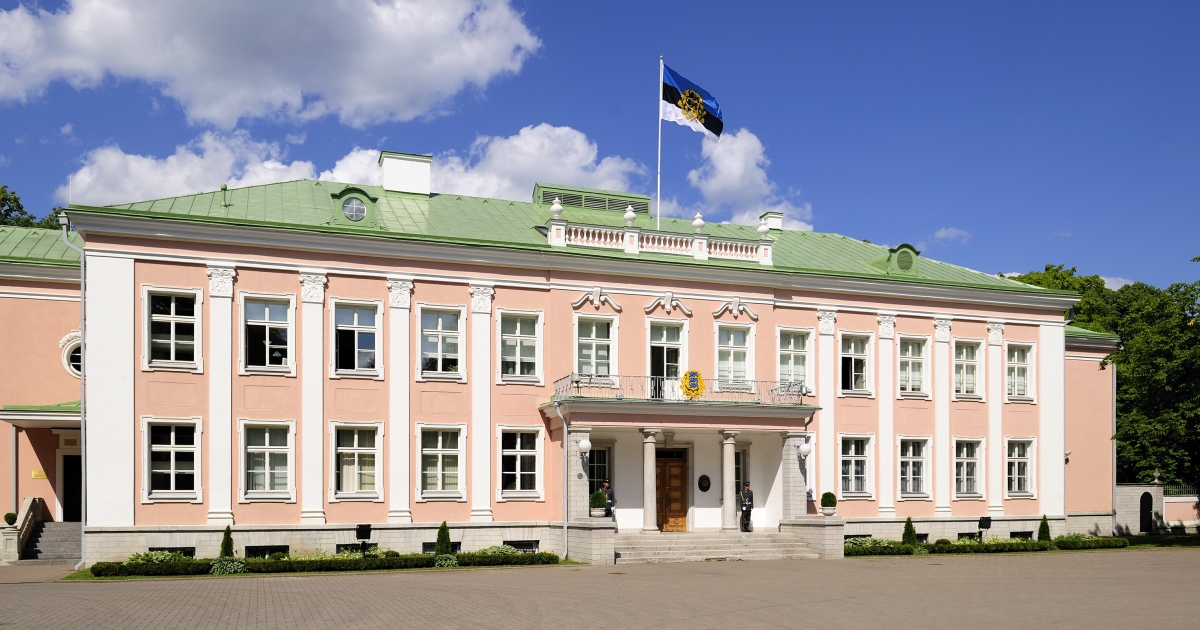
Toomas Hendrik Ilves is the president of Estonia. He has previously served as Estonian Foreign Minister, Member of European Parliament and the Ambassador of Estonia in Washington.