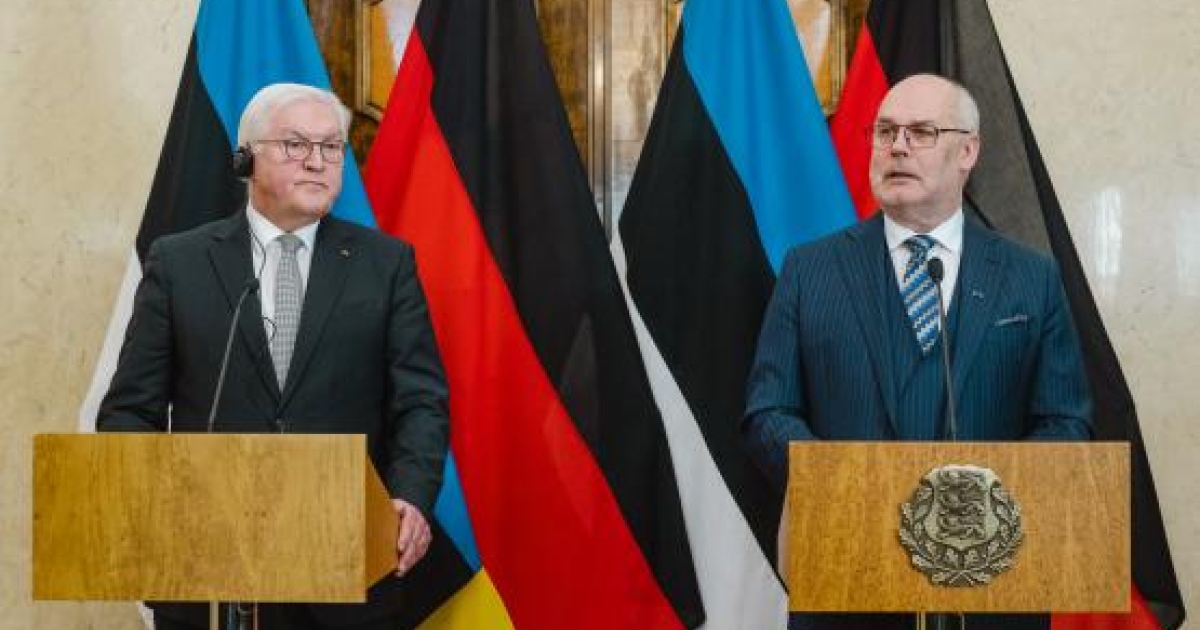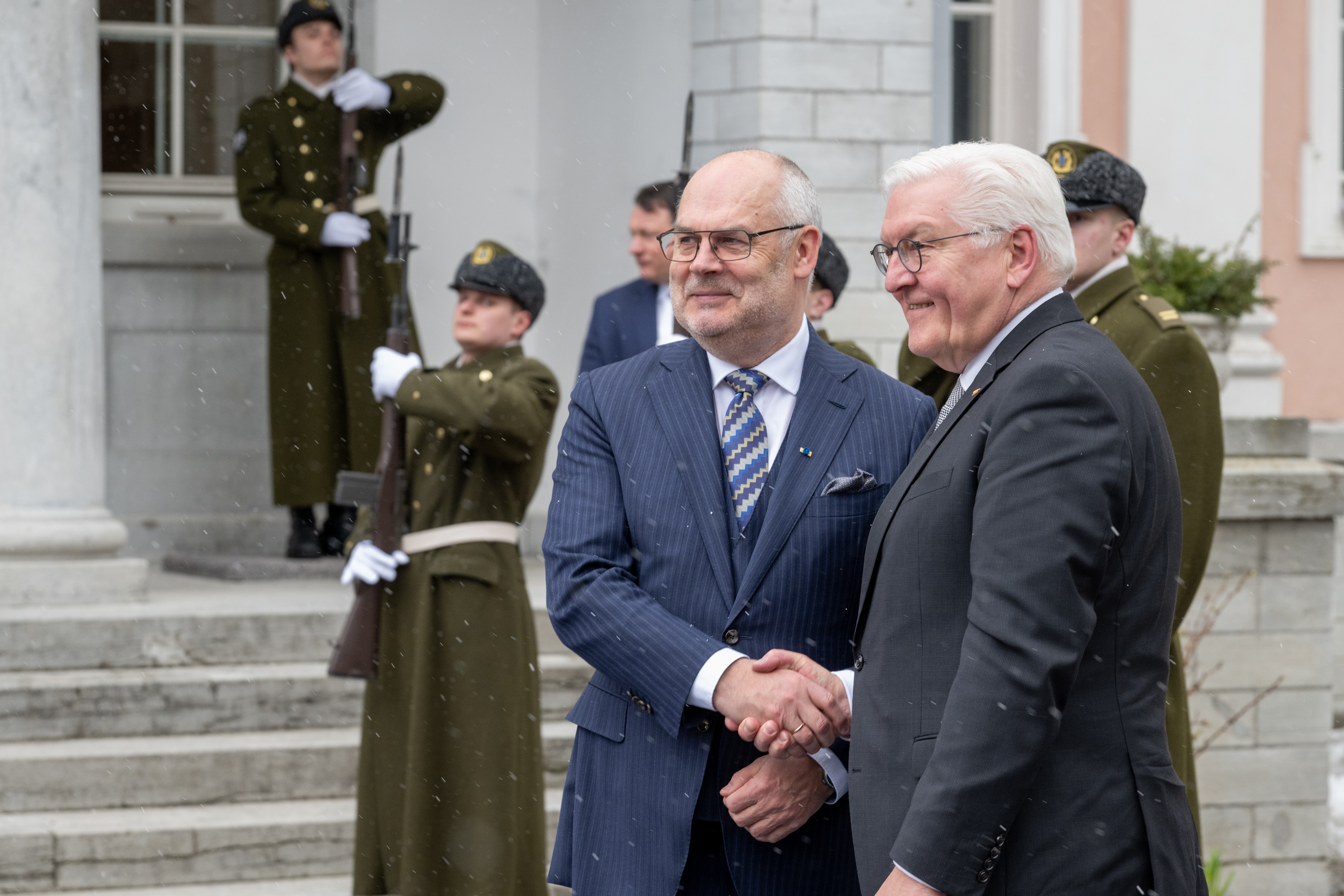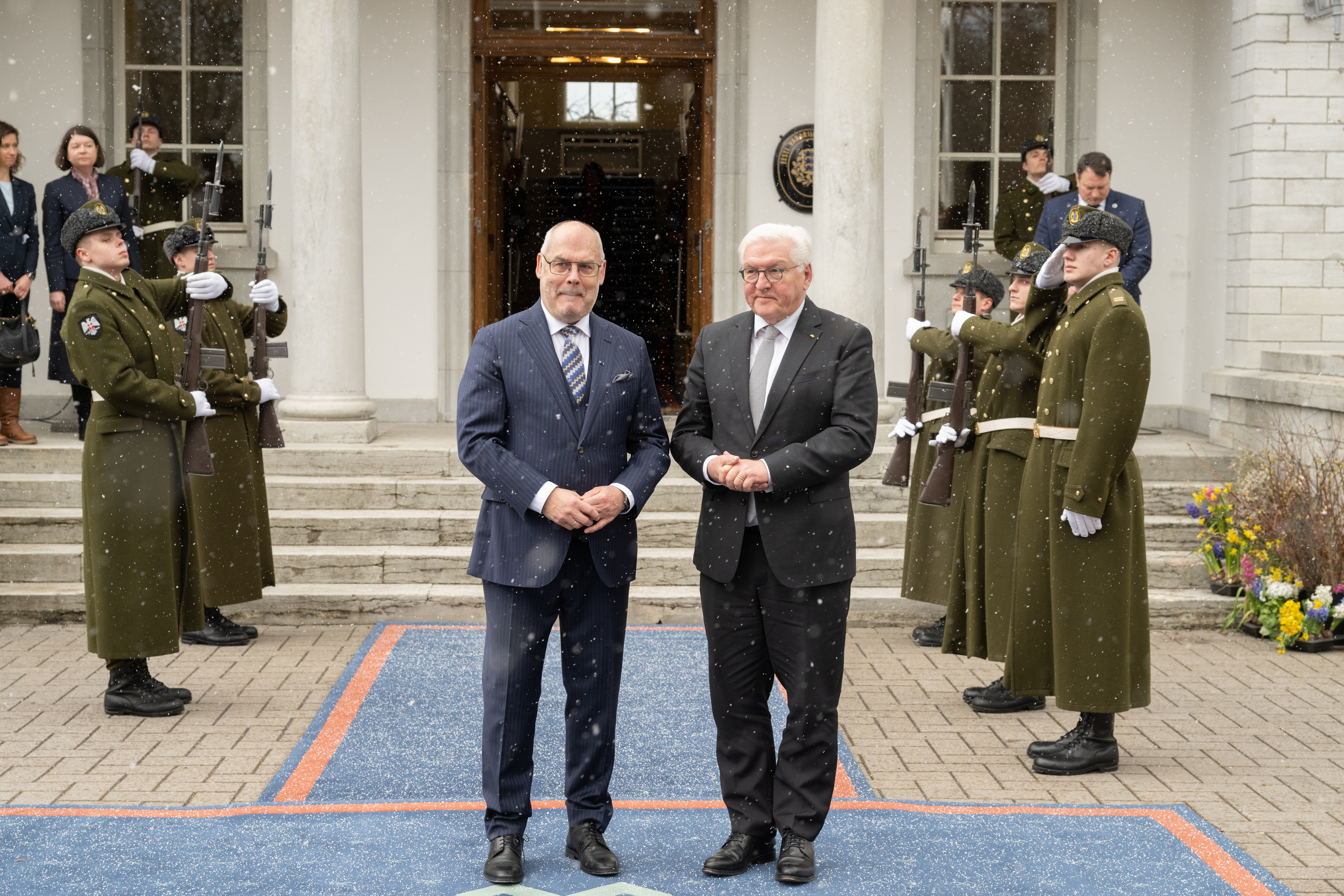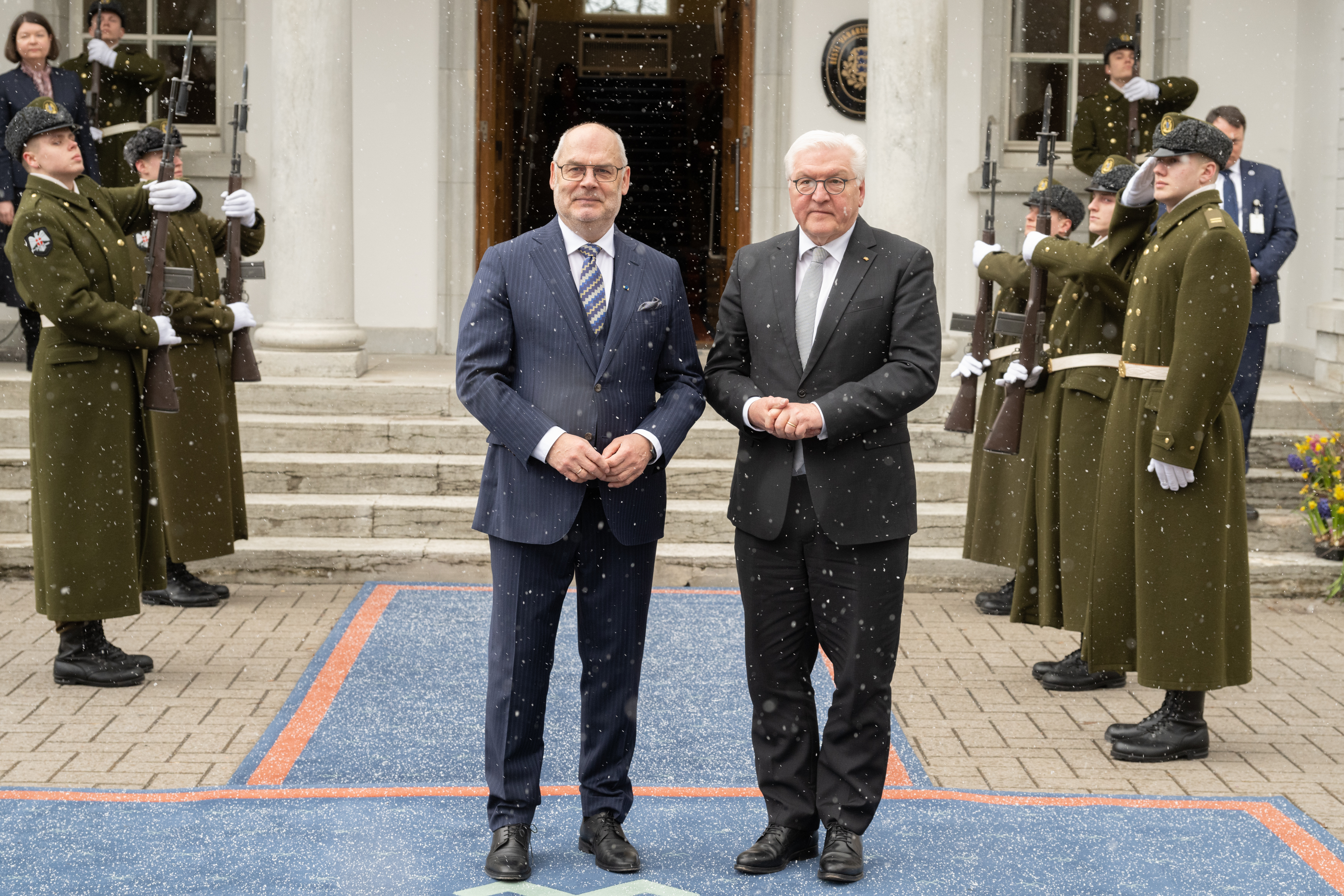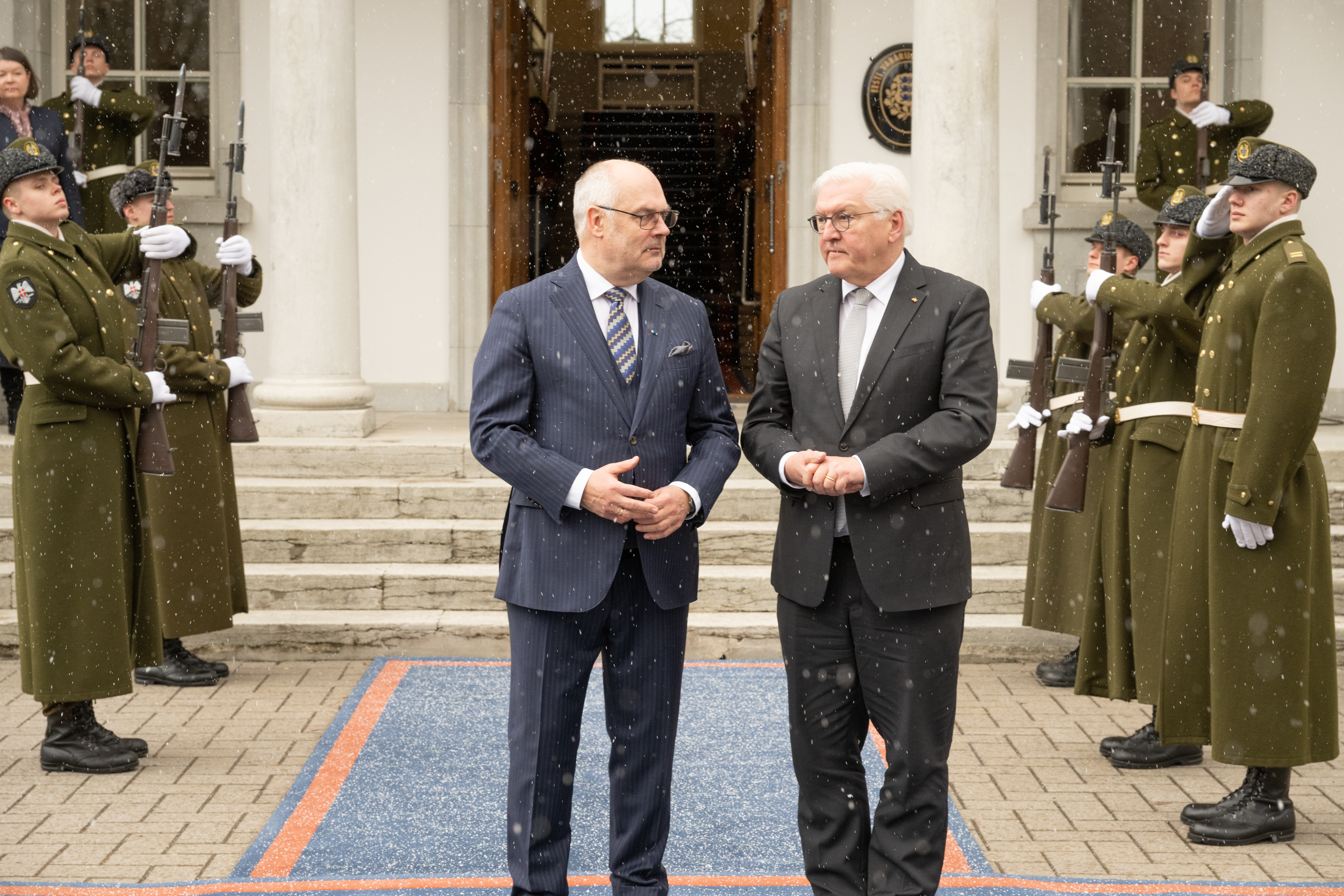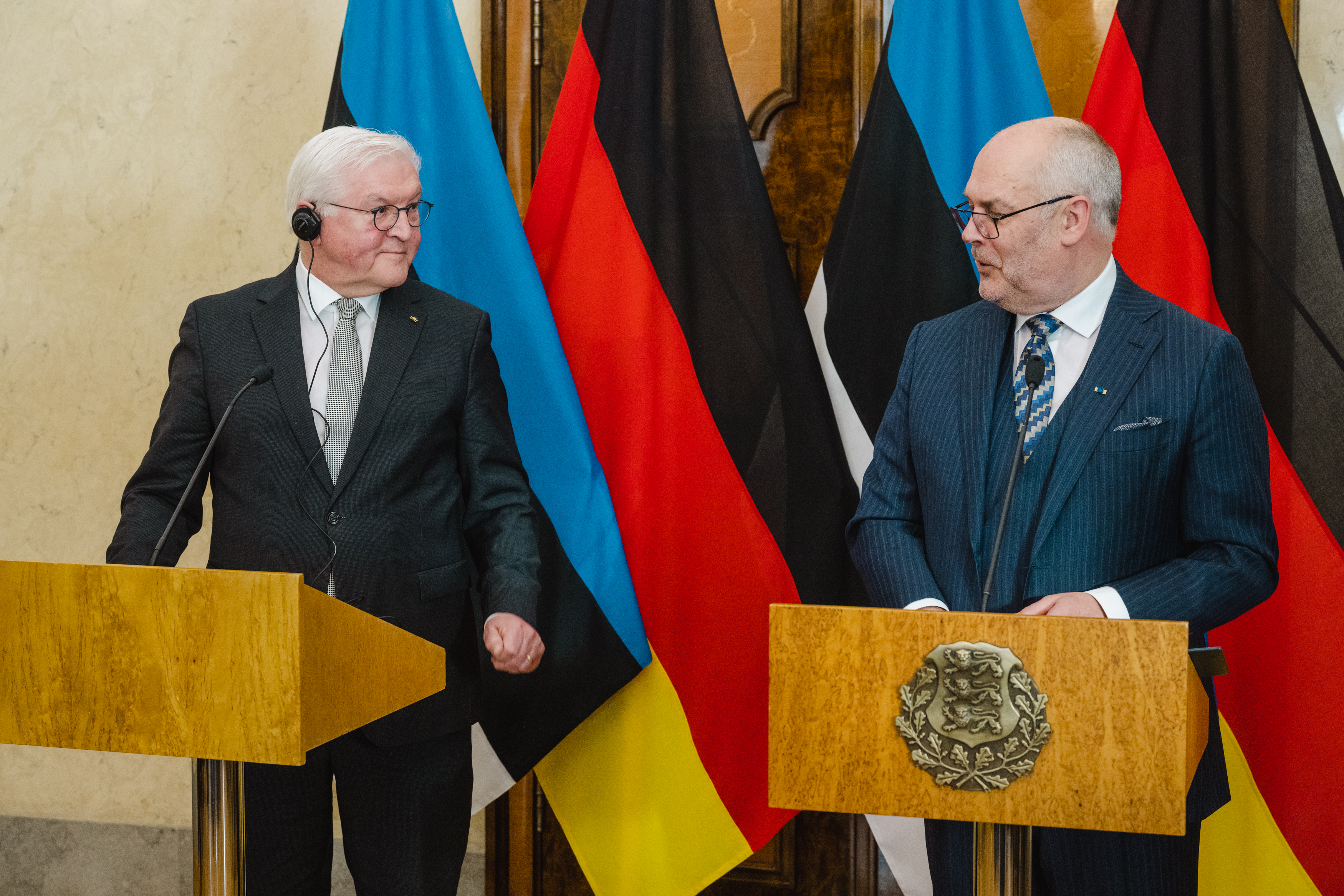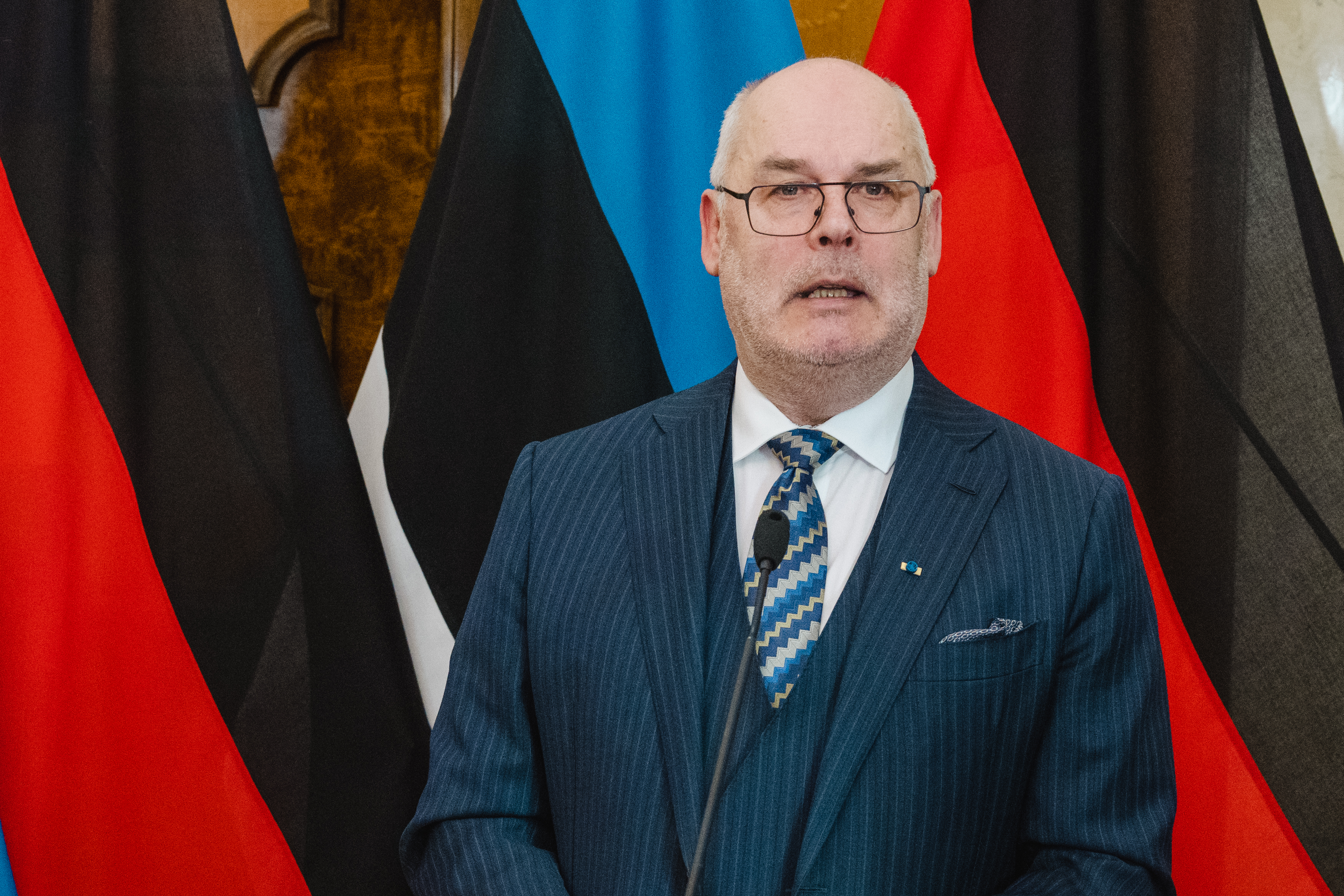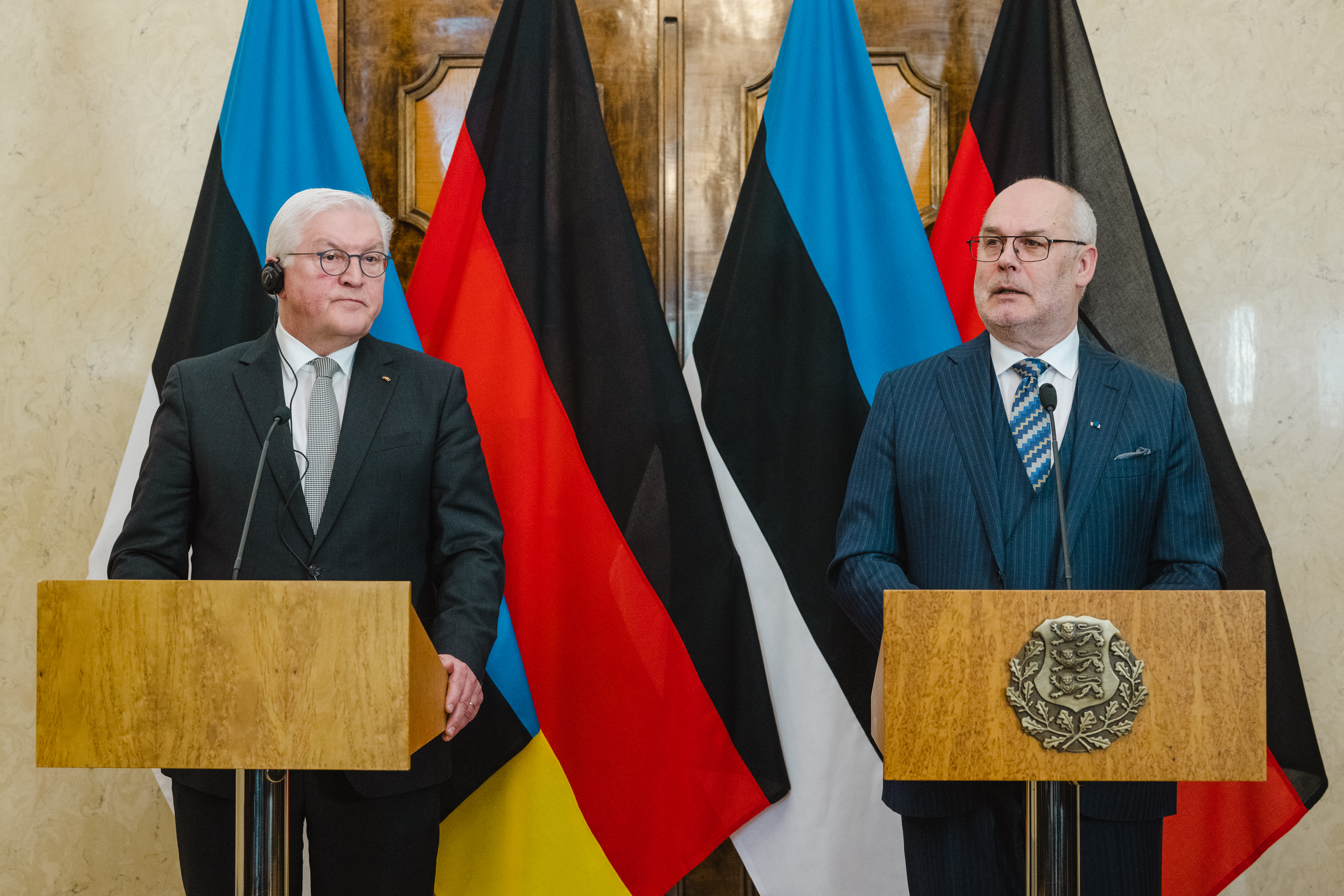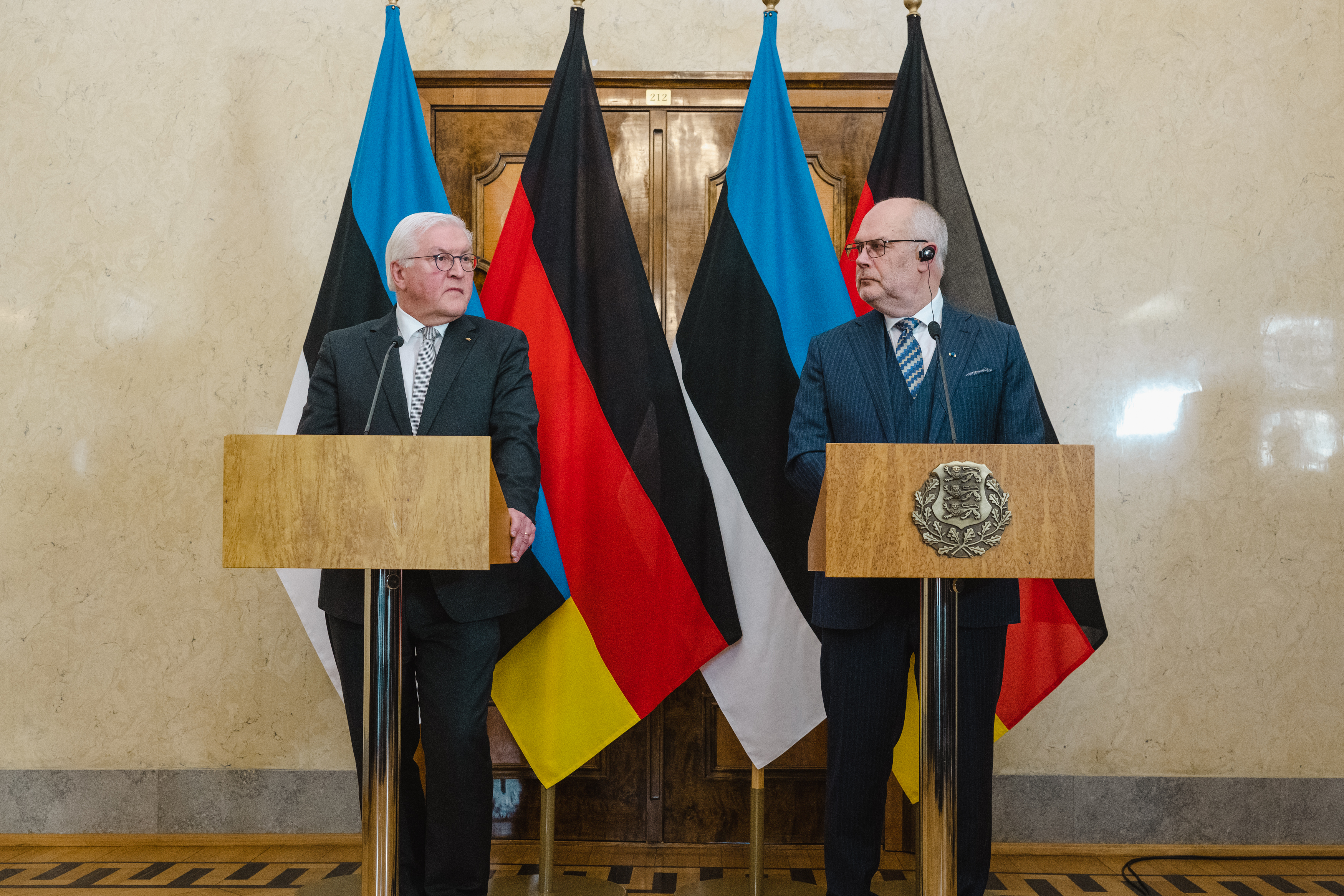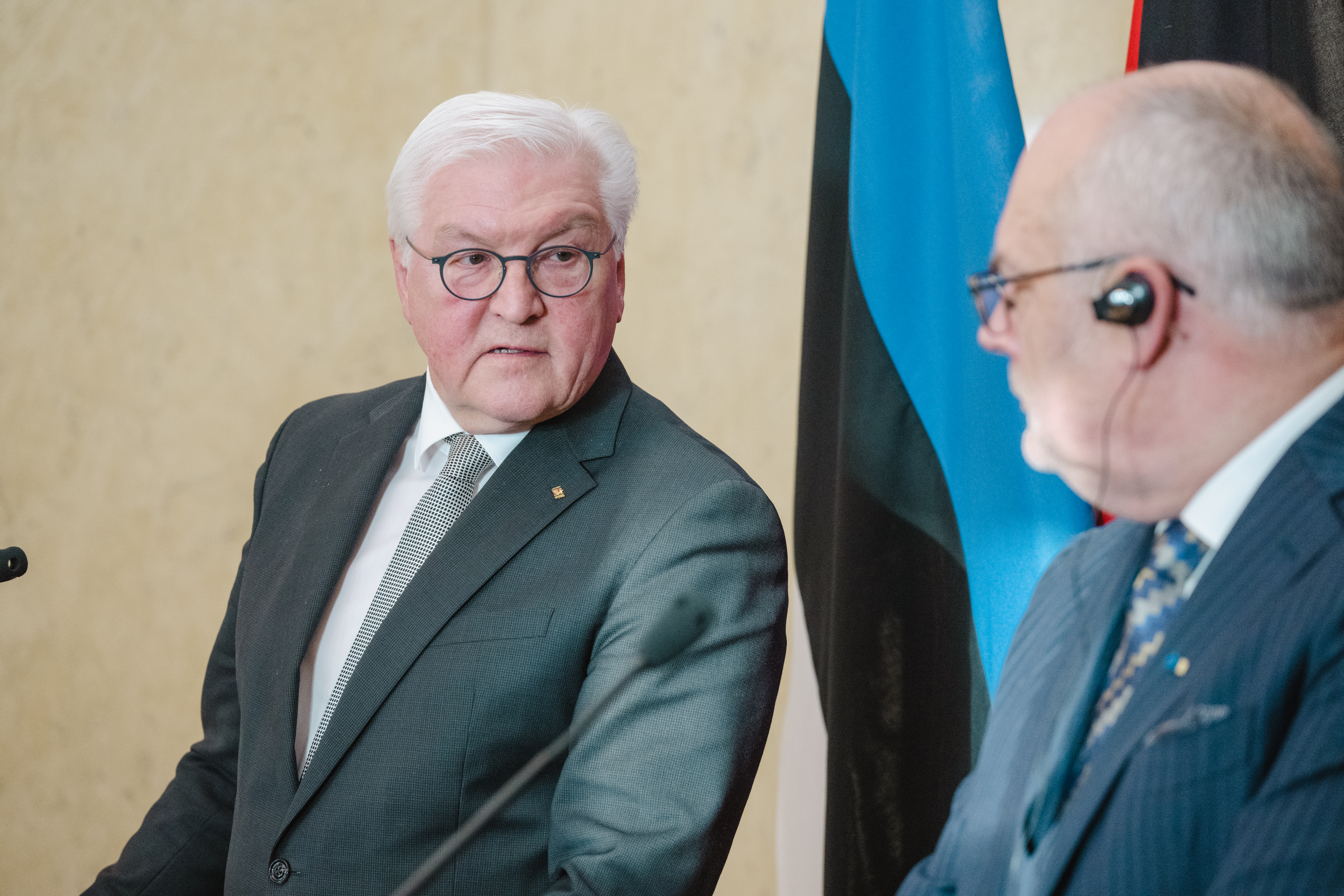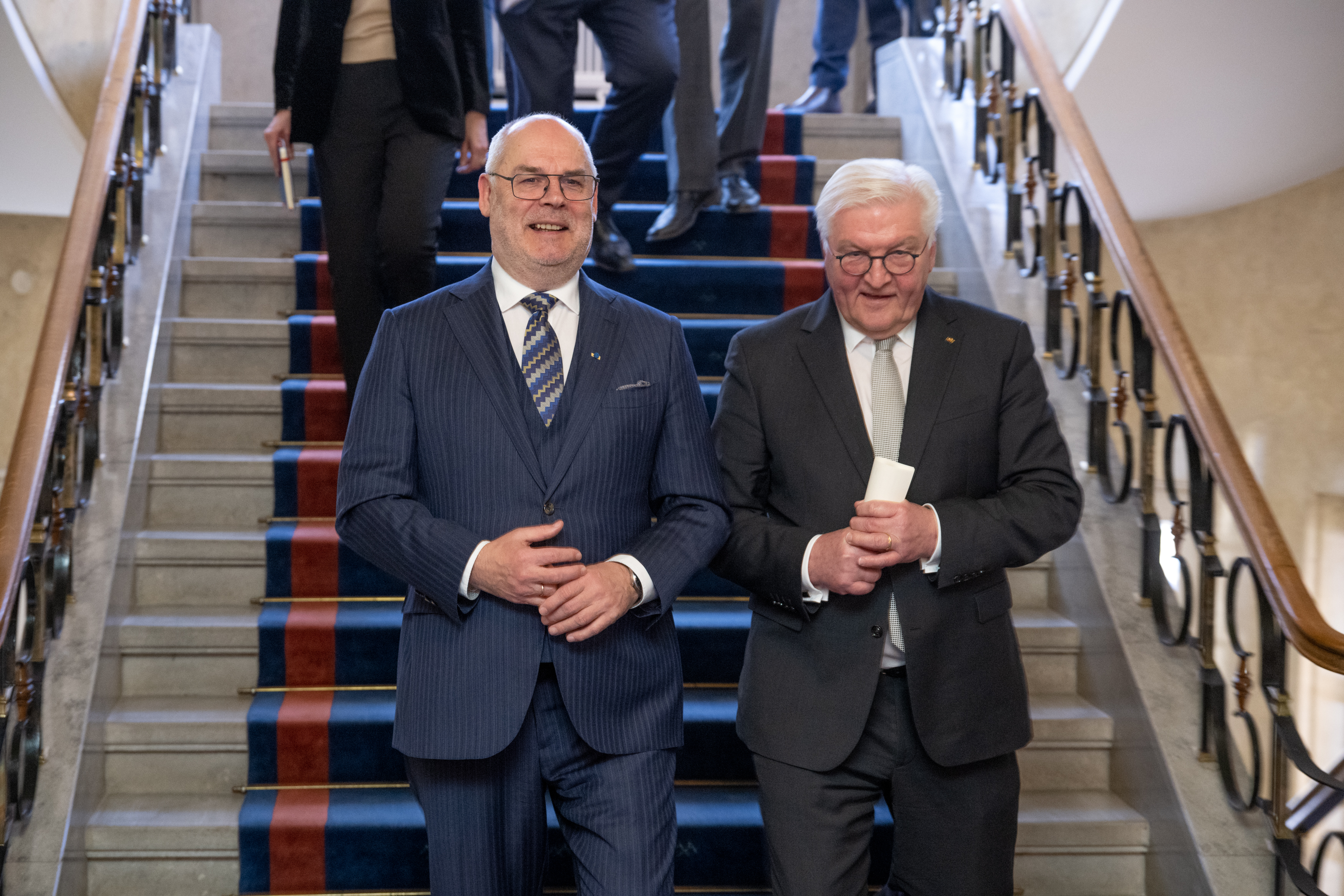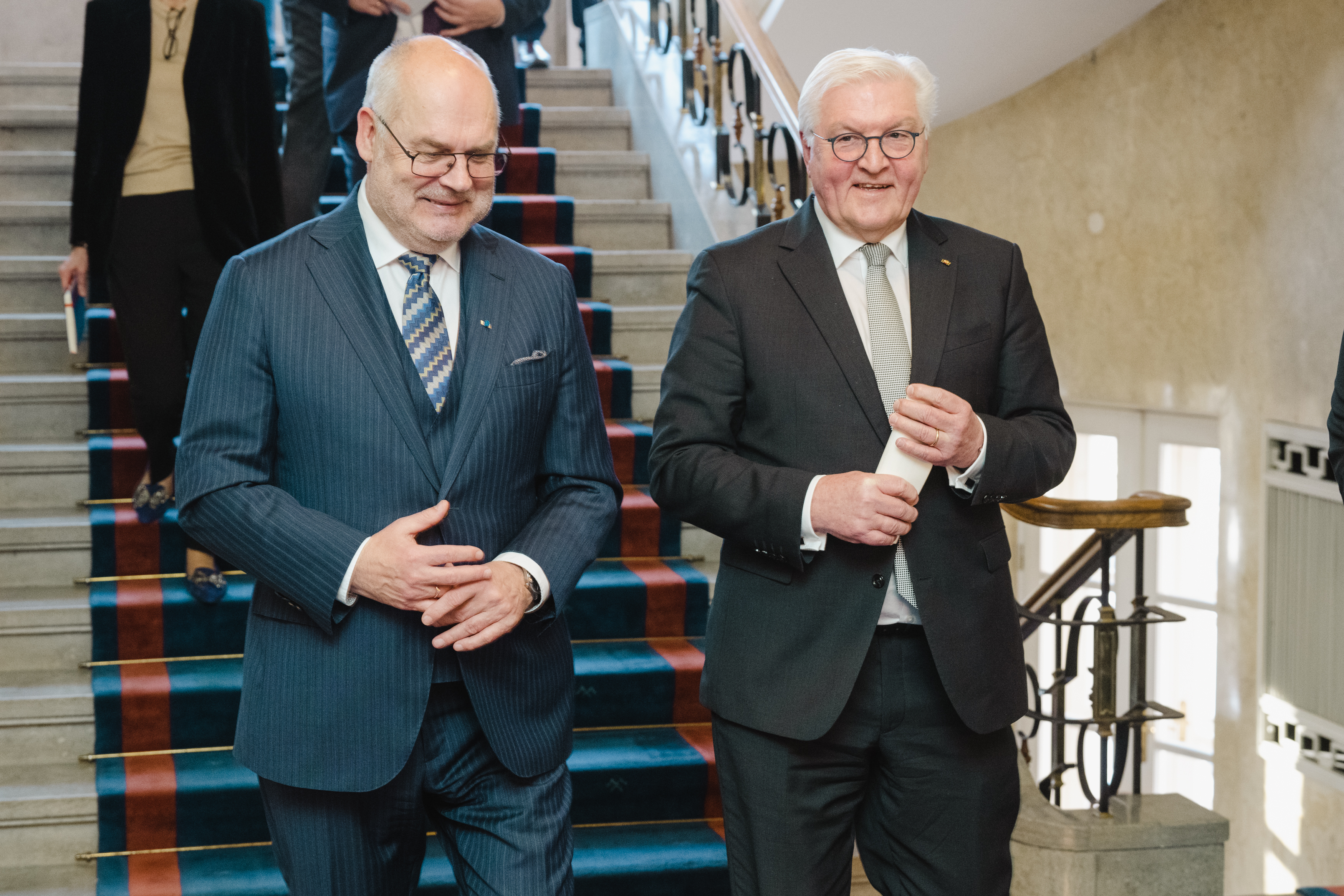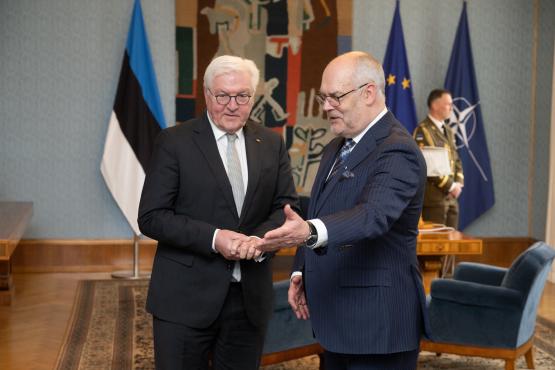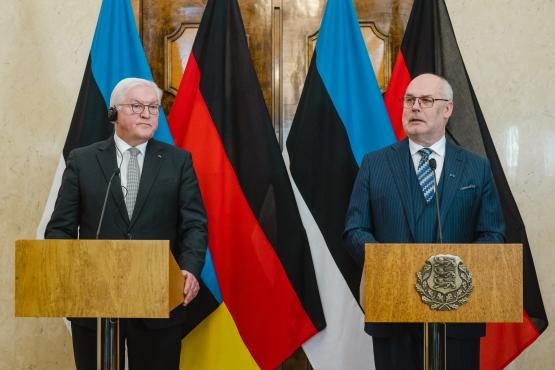
My dear Frank, journalists, ladies and gentlemen,
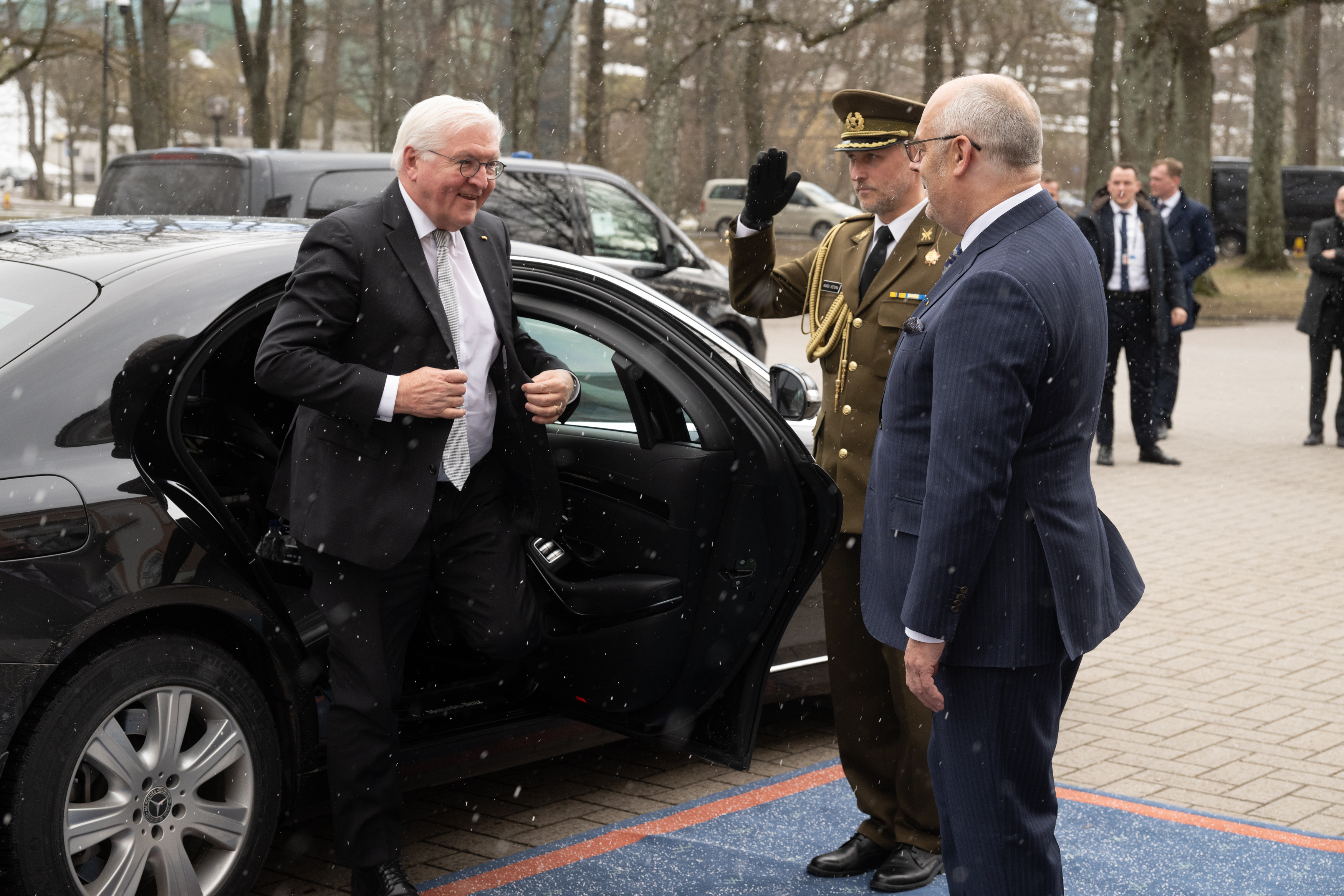
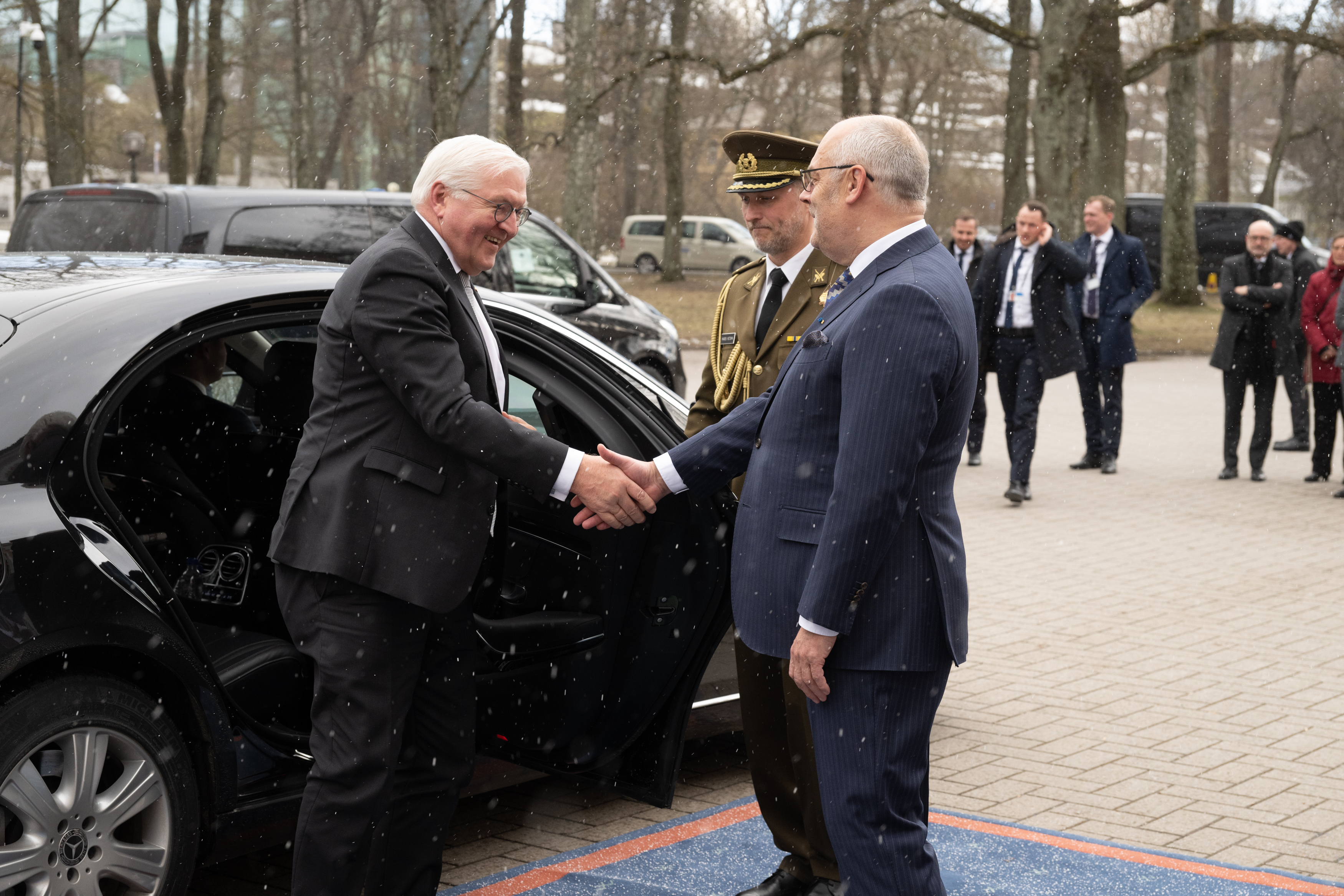
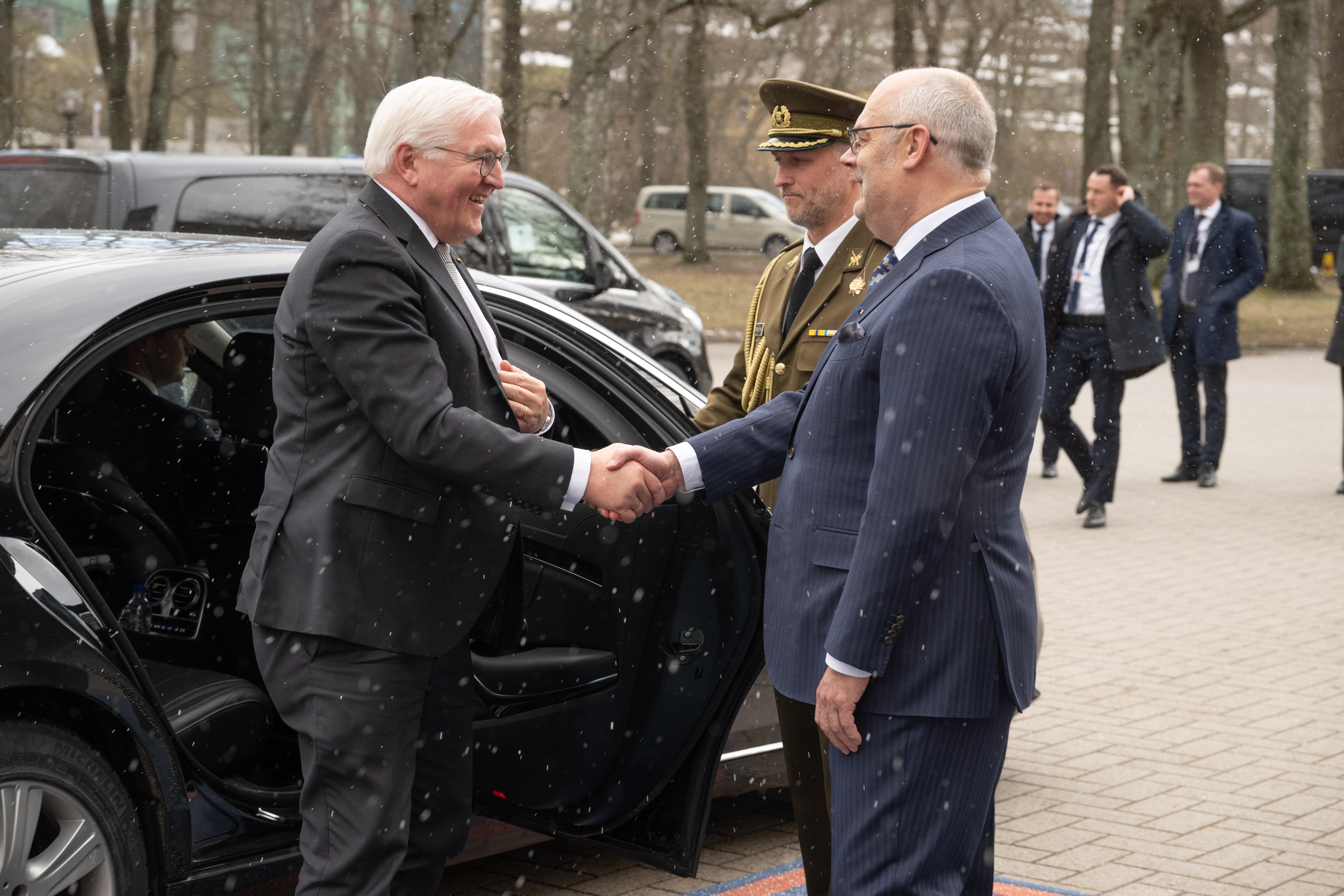
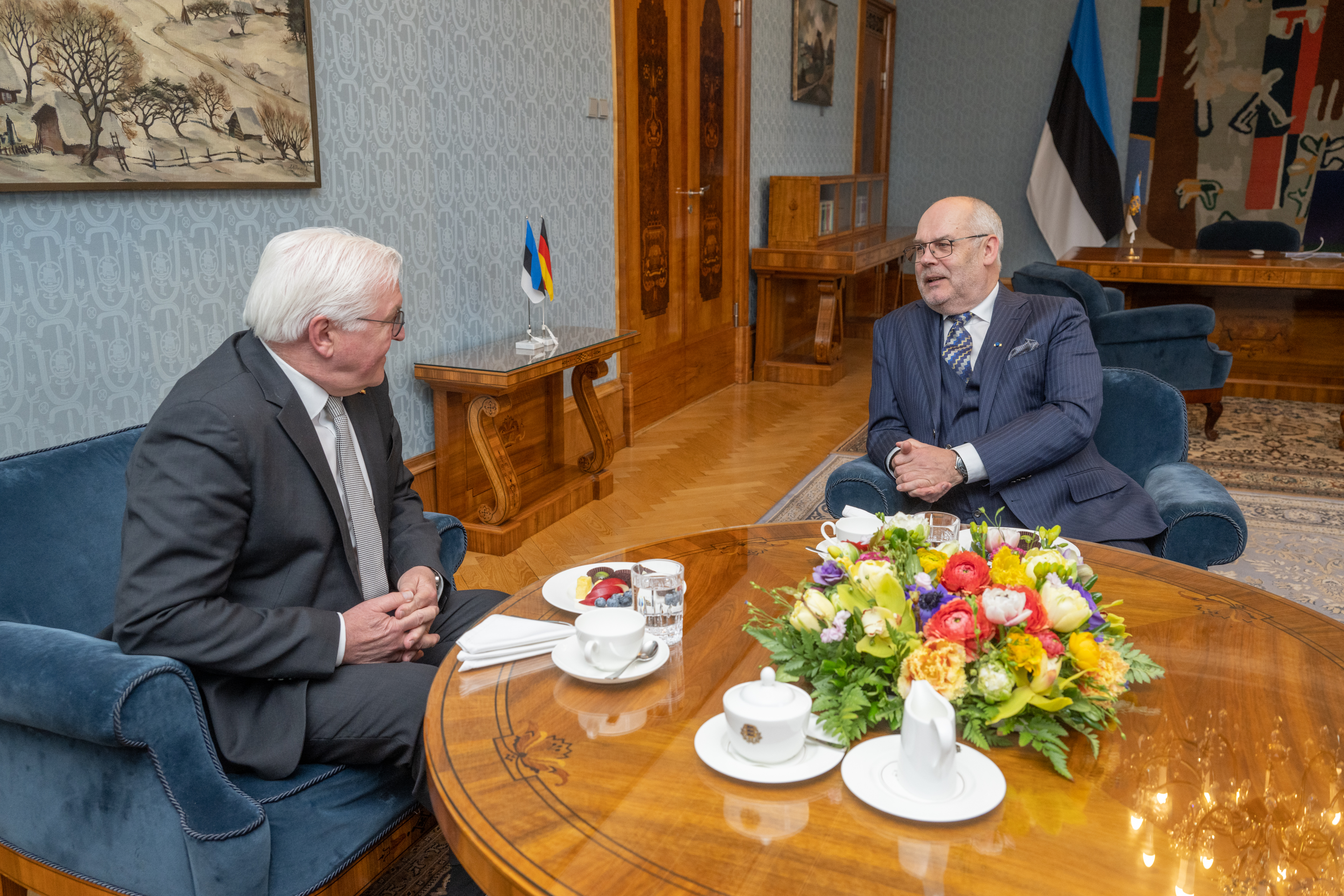
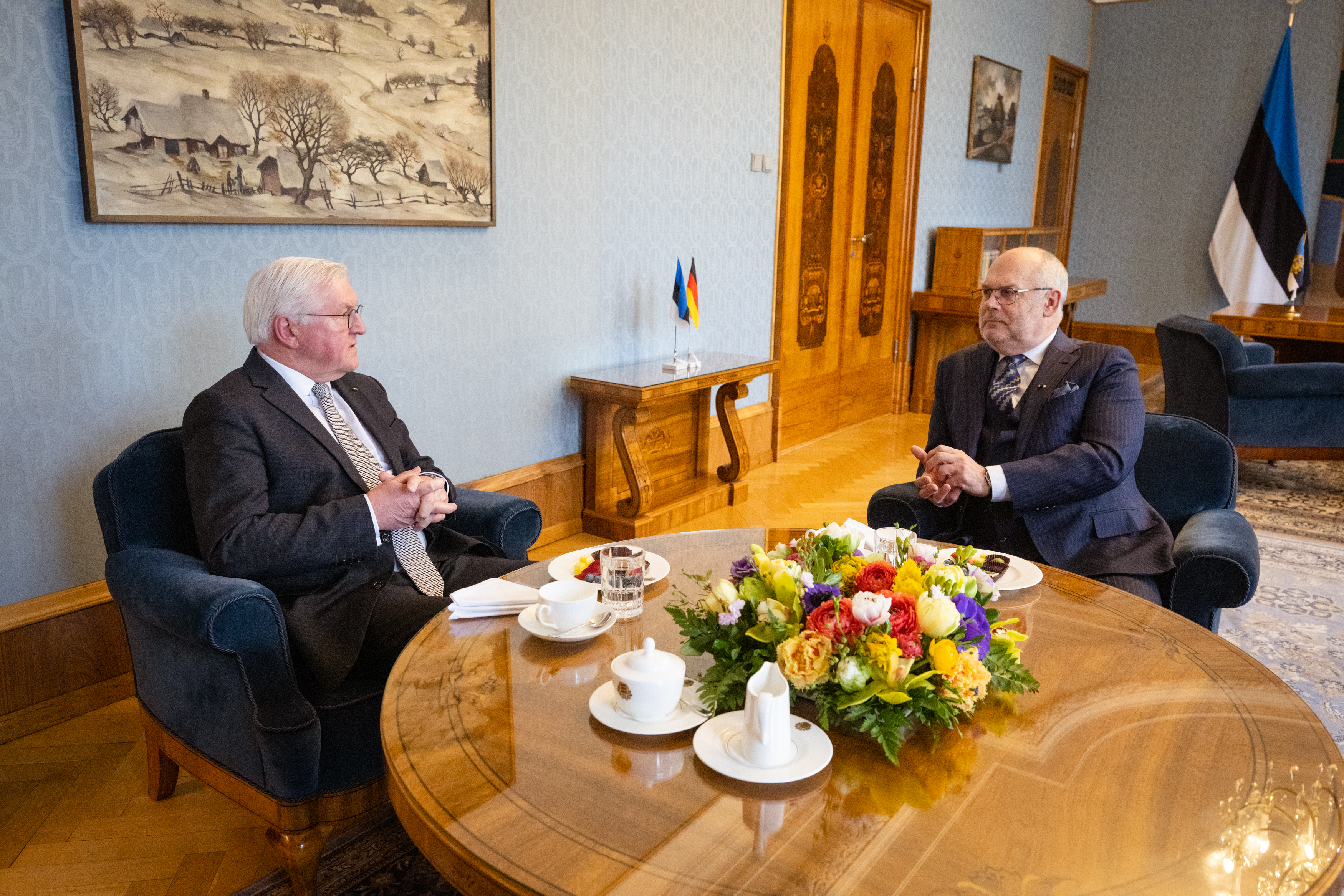
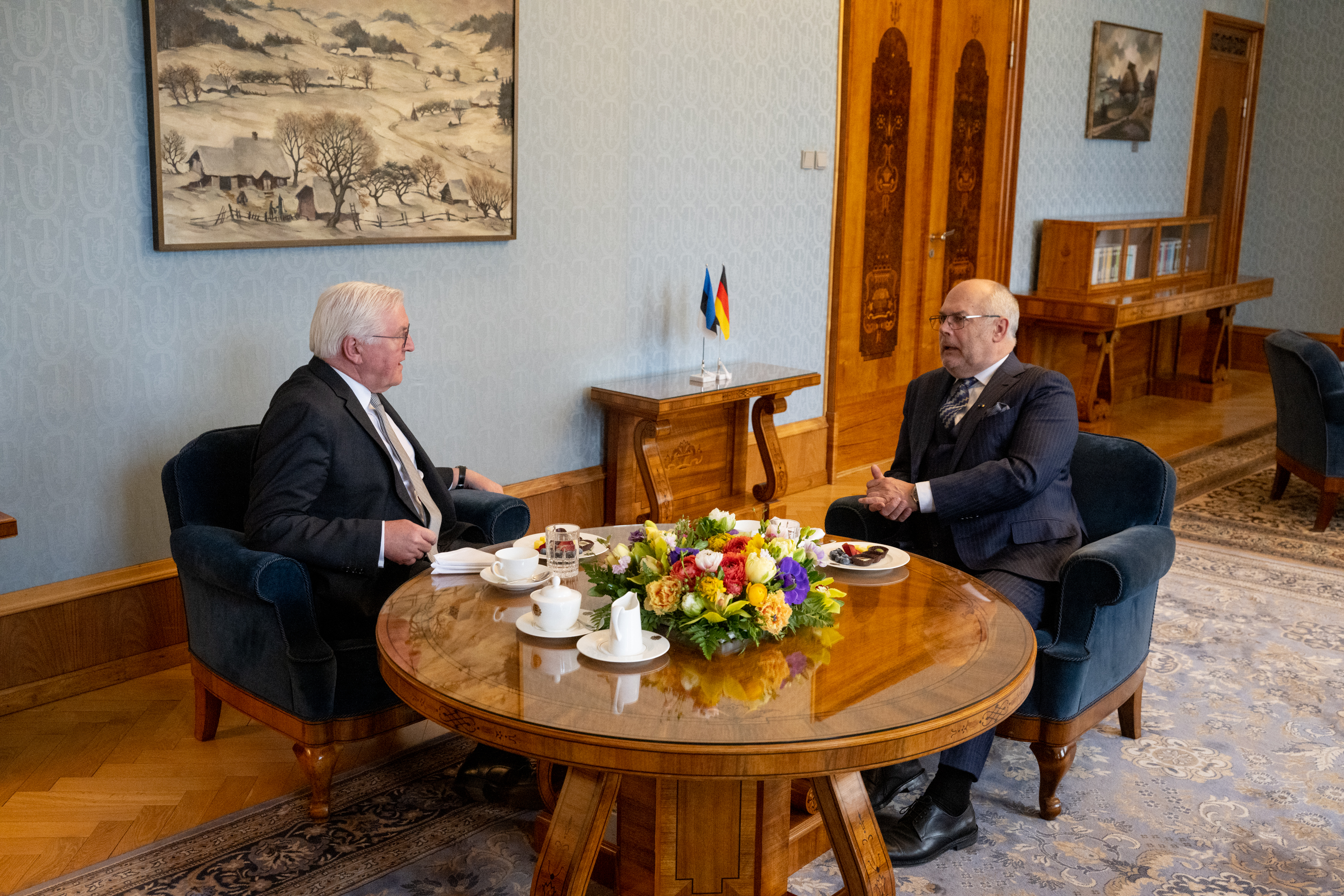
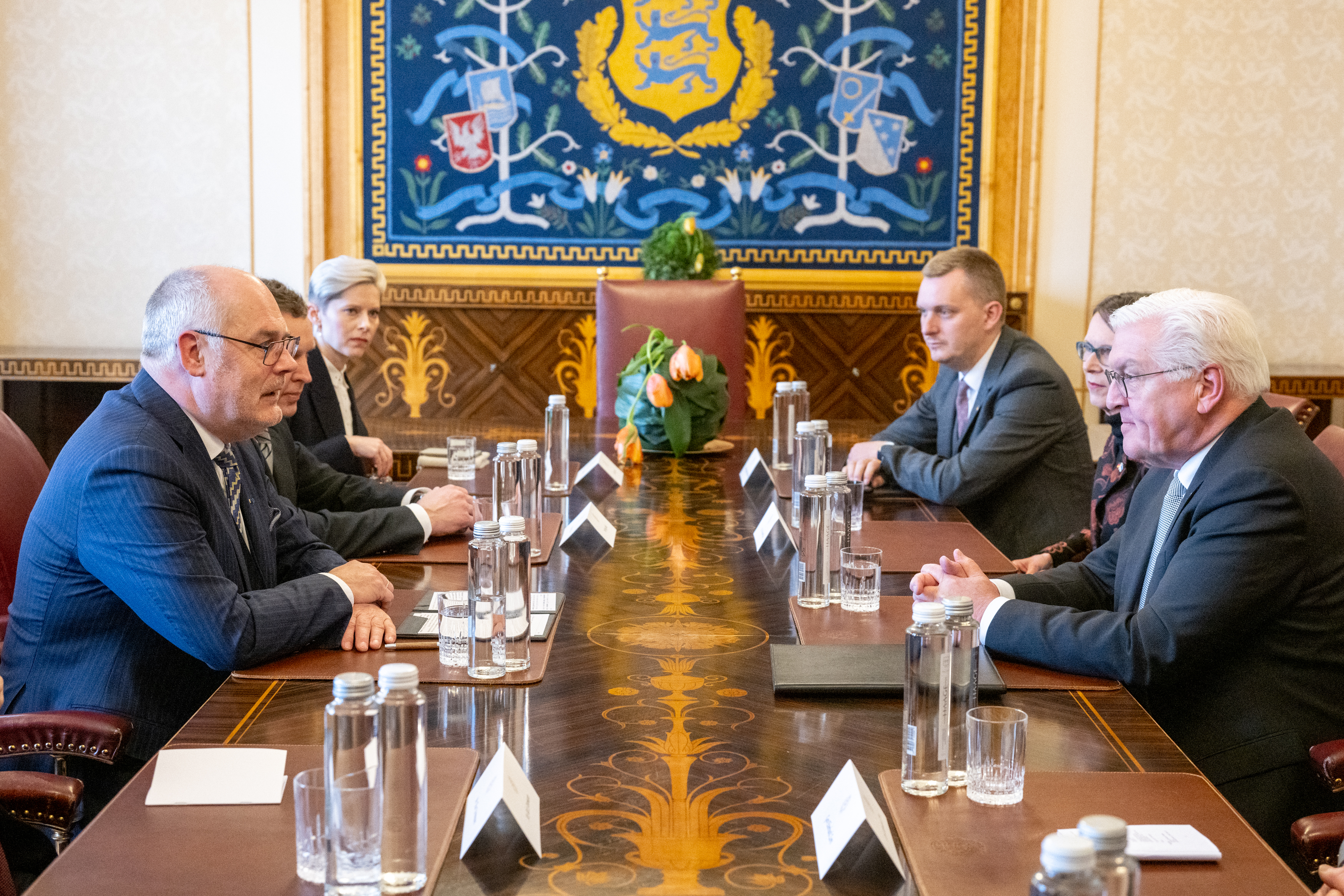
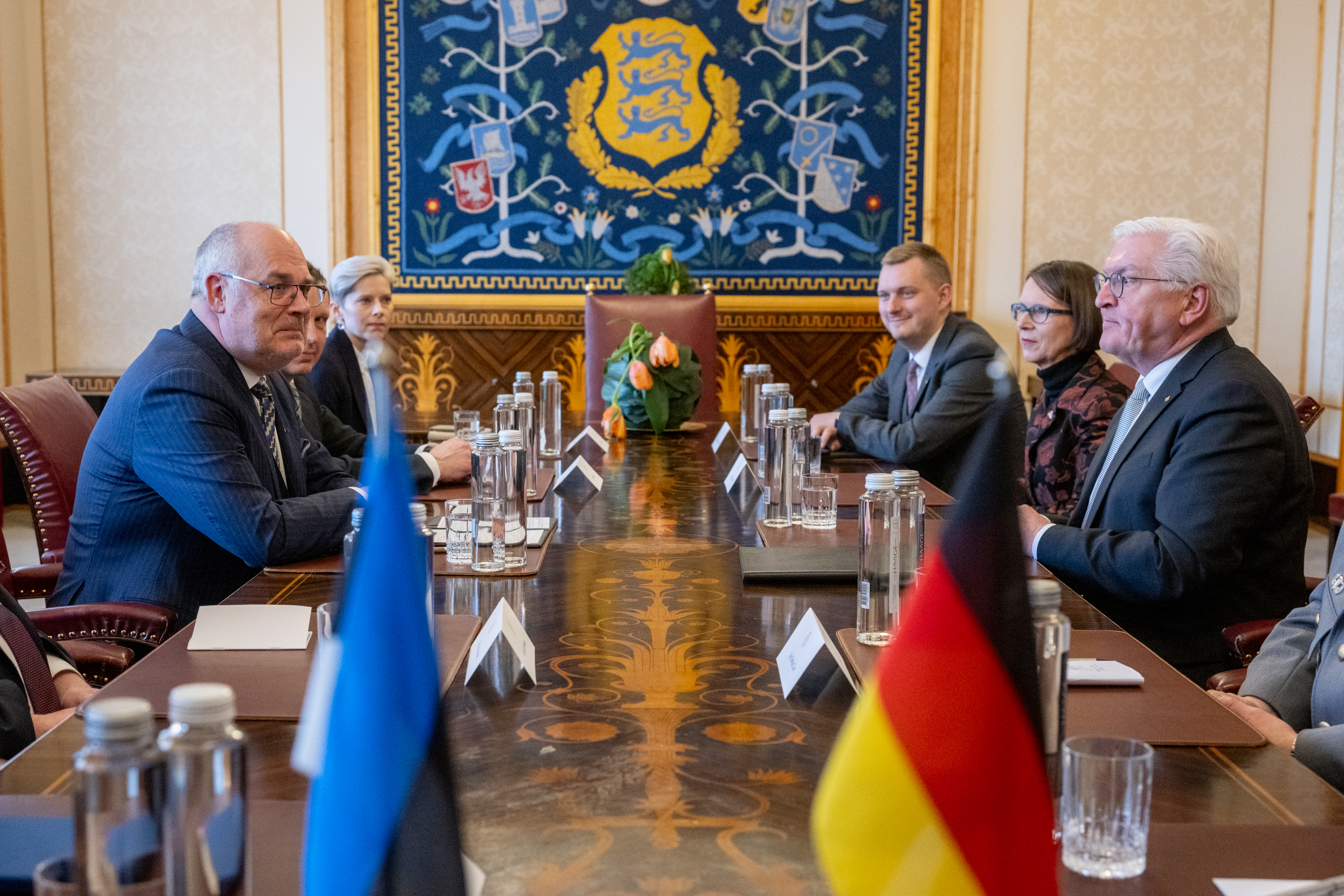
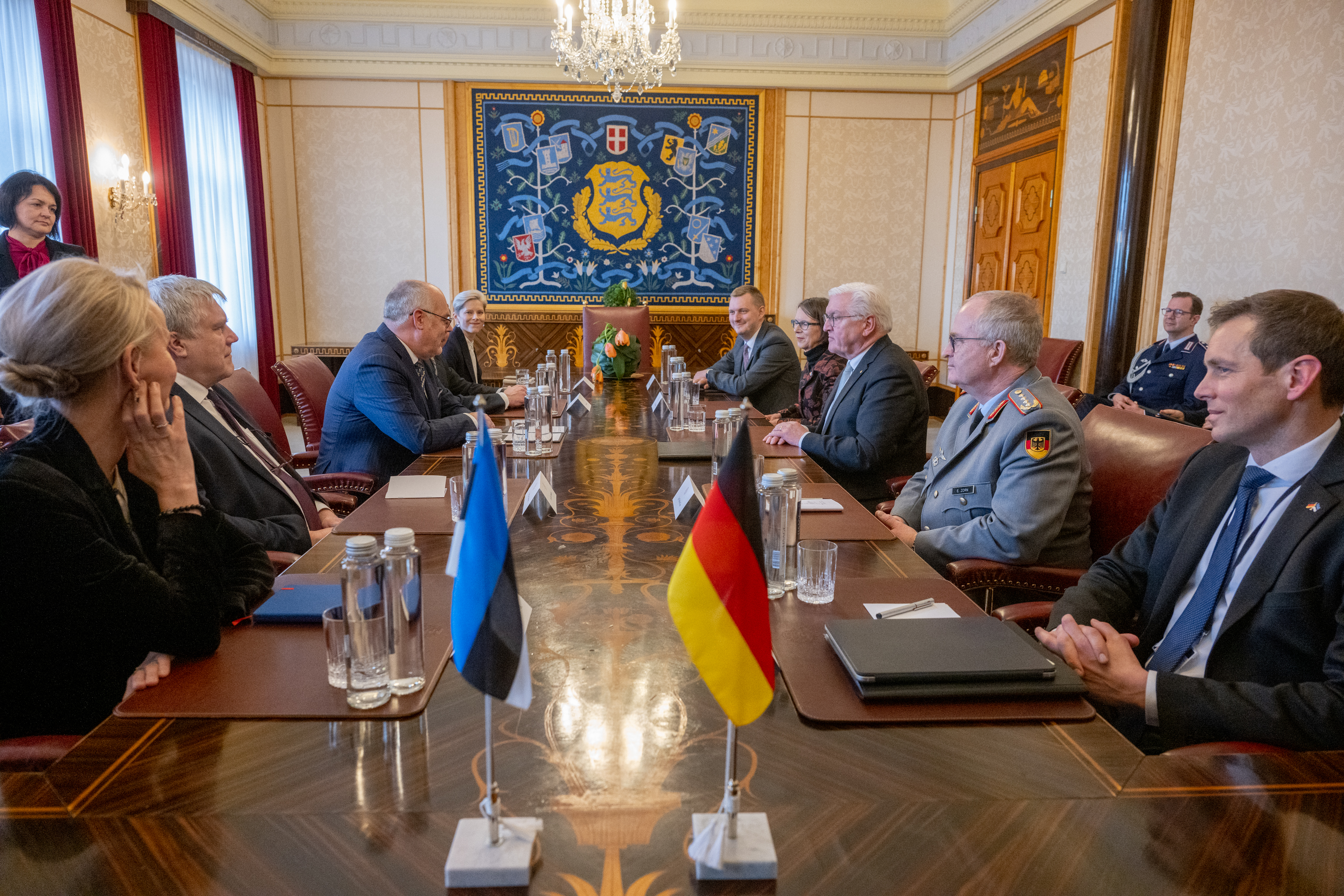
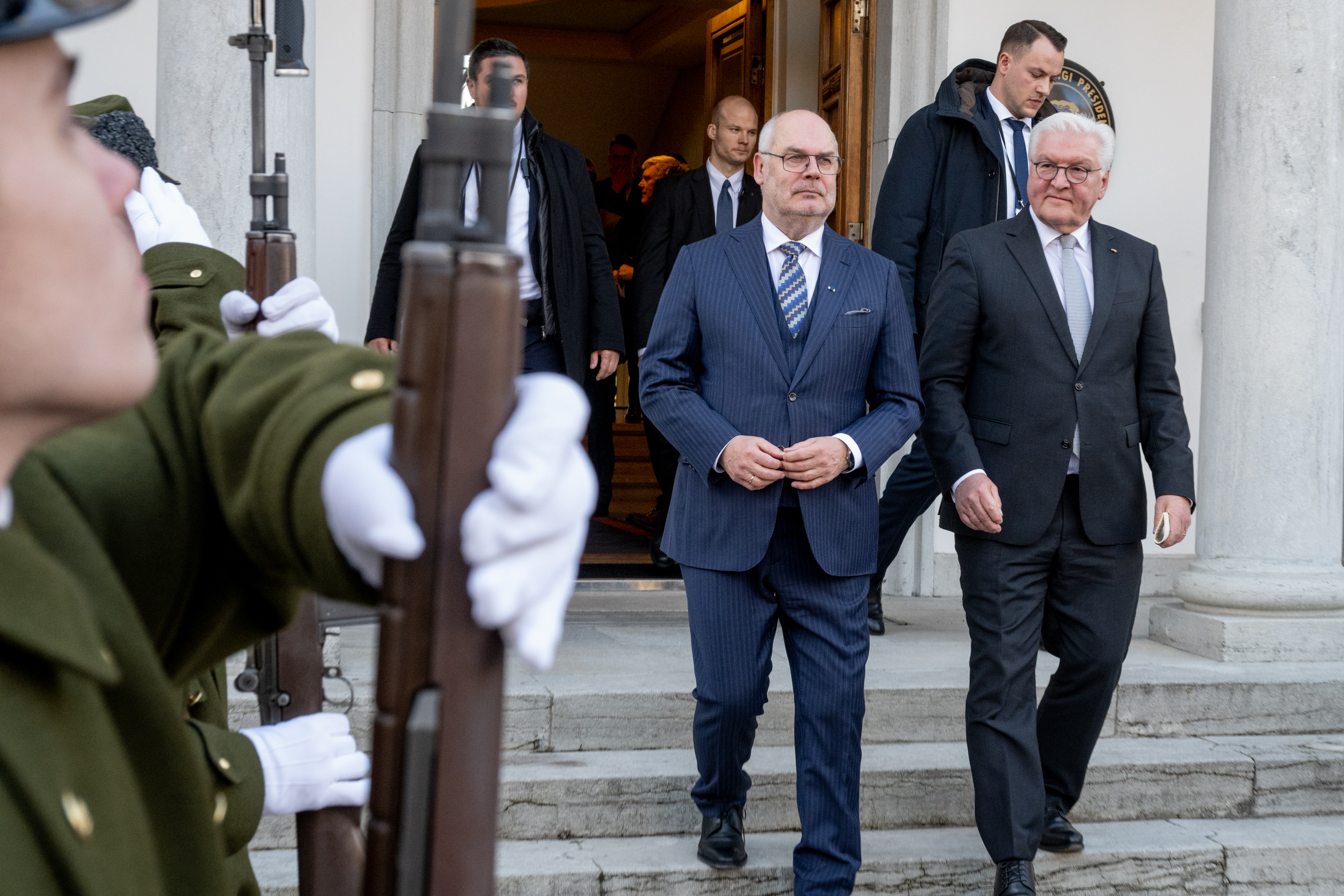
Here in Kadriorg today we have enjoyed a meaningful and inspiring conversation. I am grateful to my German colleague for never losing sight of Estonia and for always taking such a sympathetic view of our country.
As the saying goes, relations between Germany and Estonia are very much running before the wind: Estonian exports to Germany have grown by more than 40% over the last five years, while Germany’s contribution to the Estonian economy is remarkable, the country having invested 1.3 billion euros in professional, scientific and technological activities, industry and retail trade in Estonia. We also enjoy excellent bilateral cooperation in a variety of fields.
In future we hope to further intensify our cooperation in the Baltic Sea region, such as in the construction of off-shore wind farms, since we need new energy connections and sources of renewable energy.
We also have exciting success stories to share. For example, the Estonian company Skeleton Technologies is already building its second factory in Germany, this one in Leipzig (the first having been built in Dresden), which will begin producing up to 12 million supercapacitors a year. Through them, Estonia too is helping Germany create jobs.
Estonian culture is strongly represented in Germany. Estonian conductors like Paavo and Kristjan Järvi, our orchestras and our choirs take to the stage in Germany’s most prestigious concert halls like the Hamburg Elbphilarmonie and the Berliner Philarmonie. Our young artists have also enjoyed success in Germany: most recently, the art of Baltic film-making was showcased at the Berlin Film Festival.
We are further linked by shared values, and we are close allies in both the EU and NATO. We are working together to help the Ukrainians stand up to Russia’s aggression.
The donation of field hospitals to Ukraine in cooperation with Germany is a perfect example of the success of our partnership in this regard.
We have both condemned Russia’s aggression in Ukraine in the strongest terms and will continue very decisively to support the Ukrainians.
I agree with the thoughts my German colleague expressed in the statement he made on the 1st anniversary of Russia’s brutal invasion: “Anyone who orders people to be killed, to be murdered, who orders Ukraine to be bombed out of existence, to destroy entire cities, to abduct children, who allows their soldiers to pointlessly bleed out day after day, will never go down in history as the victor. They have already lost.”
We are proud of the contribution we here in Estonia have made, and we are grateful to Germany that it has granted Ukraine more assistance than any other country in Europe. We recognise Germany’s global contribution in promoting issues of importance to Europe.
We will continue to support Ukraine until the aggressor has been forced to retreat and the country’s security has been ensured.
During the meeting today I mentioned my most recent call to President Zelensky of Ukraine, in which he expressed his readiness to move quickly ahead with reforms so that accession negotiations can begin with the EU. We are of the same mind that although a ‘fast track’ cannot be offered, neither should we create further roadblocks.
Germany’s importance in guaranteeing security in Europe cannot be overstated. It plays a central role in NATO’s collective defence, both on the battlefield and in making the necessary decisions.
Without Germany, NATO would not function as well as it does and the EU’s defence policy would be weaker. Germany’s courage and decisiveness in guiding Europe’s development and its strong desire to contribute to collective defence are one of the foundations on which peace in Europe stands.
This is why the Zeitenwende shift flagged up by Germany last February directly affects us here in Estonia, too. We very much welcome every step Germany takes to boost and finance its defence capabilities.
Europe can only be protected if our forces are ready to stand against the enemy. Risks to European security mean that increased spending on defence is a long-term need for us all.
We can see Germany’s clear dedication to ensuring our collective security. Our meeting today has only confirmed that.
German fighter jets and airforce personnel have consistently participated in Baltic air security ever since Estonia and the other Baltic States joined NATO. And this is only one way in which Germany has contributed to Estonia’s security and the security of our region as a whole.
Estonia and Germany can together face the many and varied challenges the future brings. One of them is implementing more environmentally friendly energy solutions and thinking about how we can ensure effective connections to new offshore wind farms in both the Baltic and North seas.
Lastly, I think it is fair to mention the dream that Estonians have long had of being able to travel directly from Tallinn to Berlin by train. While we continue to have such dreams, we can overcome any challenges – and one day we will see the completion of the Rail Baltic project, benefitting Estonia, Germany and all of Europe.