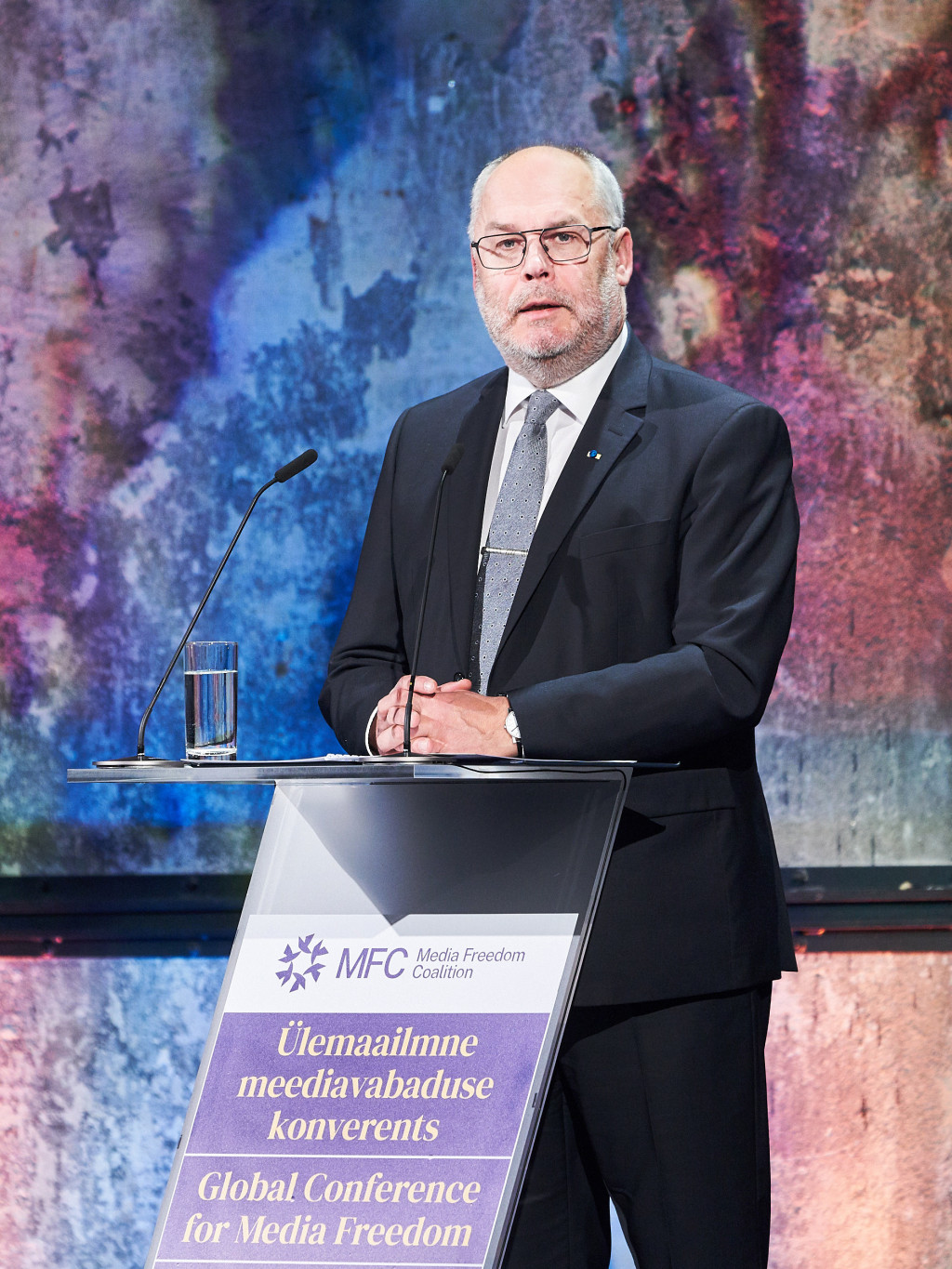
Free society cannot exist without free media. Free media cannot exist without free society. It is as simple as that. Therefore, it is our duty to protect free society as the foundation of media freedom.
Estonians have at least twice in history witnessed the true power of free public debate. First in the 1930’s, when we lost the freedom to speak freely and this led us to a closed society, which in turn eventually became one factor leading us to losing our independence. Second time was in the late 1980s, during the Singing Revolution, when journalists and historical figures became initiators of public debate, which led us to the restoration of our independence.
Free public debate, empowered by media, is a tool that can change the course of history. We must therefore treat it with great respect and caution. Unfortunately, we see this tool effectively used as a weapon against us, through massive disinformation campaigns, with an aim to destabilize our societies and trust in our democratic institutions.
Never before have there been so many opportunities for everyone to create and spread disinformation on such a scale and with such speed as today. New technologies have opened new and unprecedented avenues for seeking, receiving and sharing information.
As these means are open to everyone, the quantity of news has increased to the point, where finding quality news has become difficult. Keep the bad news light and keep it simple, keep it stupid, is the best advice, if you need to attract masses. It should not be like that.
As a former scientist, I know the meaning of the scientific method: reasoned argumentation and a reliance on facts. Journalism is not far from science in its inherent nature. The media must constantly protect its status as a factual institution, so that the line between truth and lies does not blur.
Therefore, in democracies our duty is to protect the media as the nervous system of our society. To protect the value that media diversity offers, to ensure the quality of news through educated journalists. To have a competition policy, to prevent market failures and to guarantee equal opportunities for free media outlets.
Secondly, in non-democratic states we need to protect the people, the journalists who though self-sacrificing bravery deliver us the truth. It is convenient and safe to be polite to authority and stay obedient. This is all the more a reason to admire journalists who, in the face of fear and repression, stand up for the fundamental nature of journalism: to search for truth and present facts.
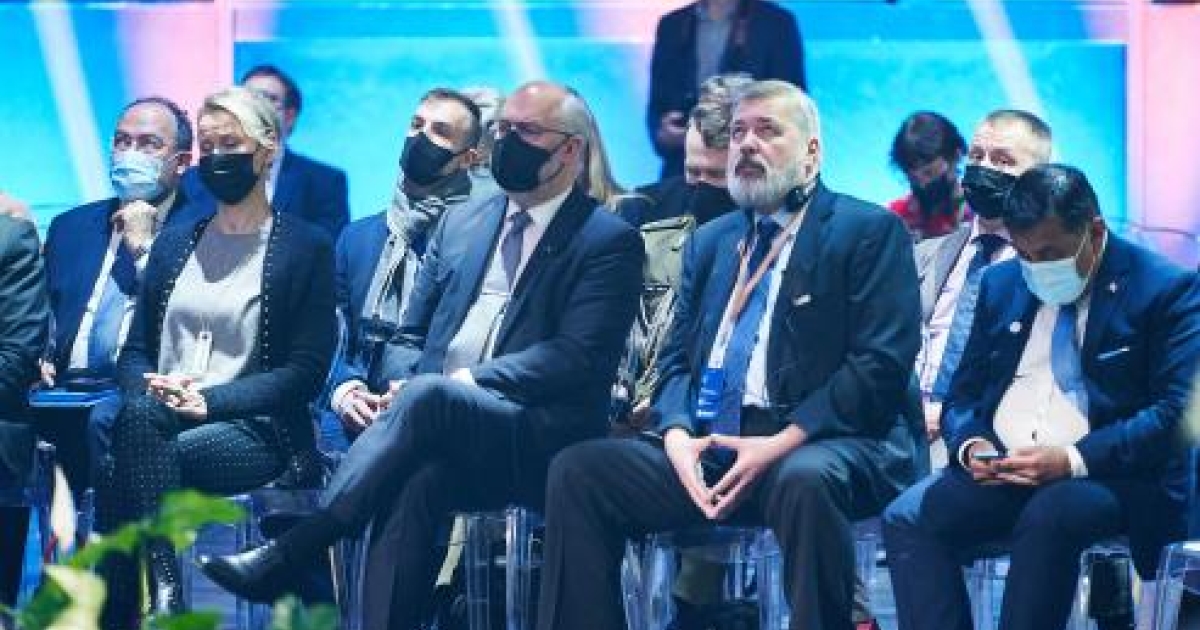
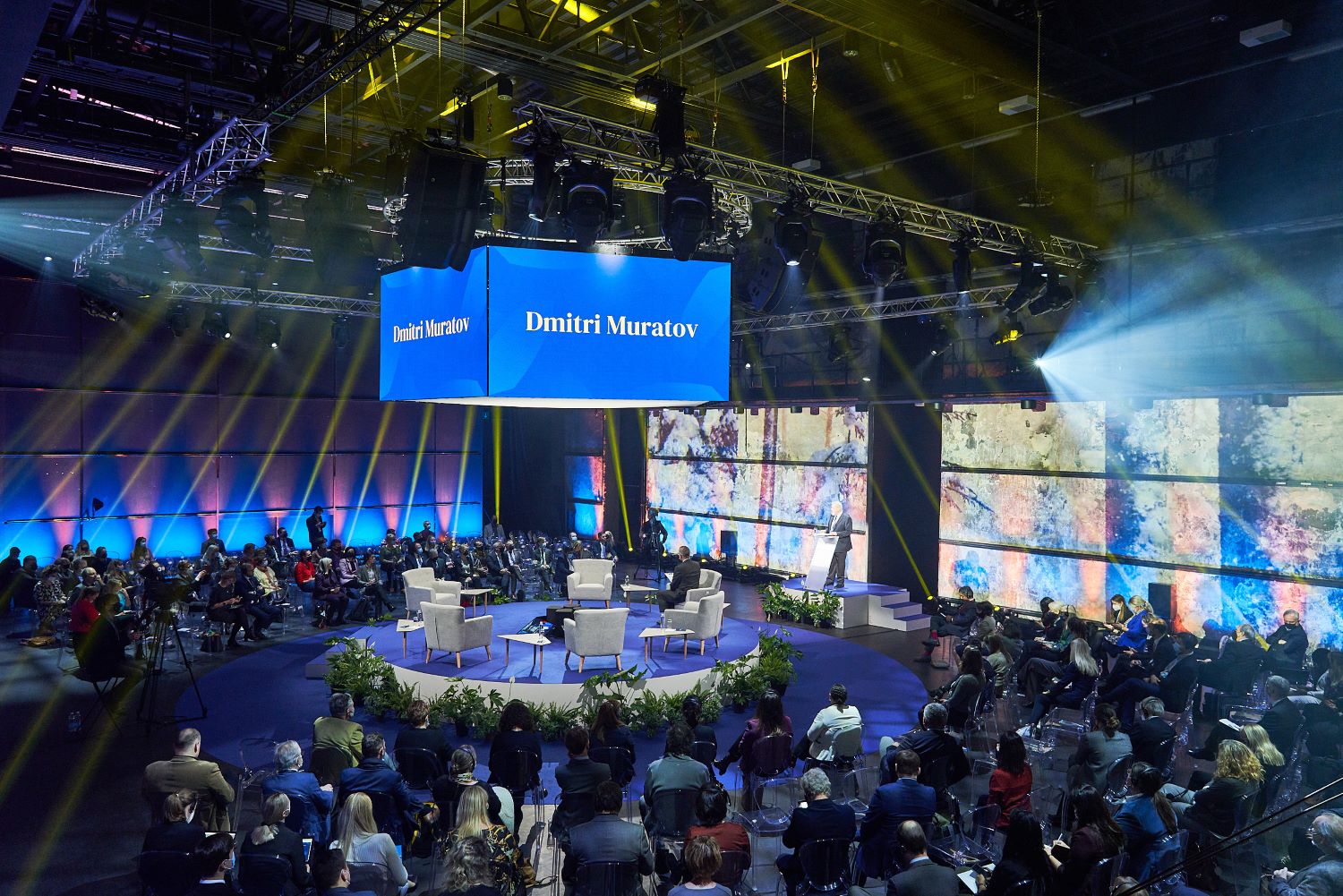
Nobel Prize winners Maria Ressa and Dmitry Muratov carry such special courage. Mr Muratov, thank you for being here with us today.
We are seeing highly worrying situations in many places - be it Eritrea, Belarus, Afghanistan etc. Belarus is the most dangerous country in Europe for journalists today. Critical journalists and bloggers are subjected to threats and violence and are arrested in large numbers. Afghanistan had free media just a year ago and now Taliban authorities have imposed wide-ranging restrictions on media and free speech.
Media freedom is fragile. Witnessing these worrying changes, I would like to commend the efforts of the Media Freedom Coalition to make a change. I would like to thank the chairs of the coalition, Canada and UK for their tireless work in launching the coalition and making it instrumental. I wish all the success to Netherlands as the new co- chair of the Coalition.
I would also like to thank the members of the Consultative Network and the High Level Panel of Legal Experts on Media Freedom for their work and input for this conference.
Last, but not least, I would like to thank all journalists and media workers around the world for doing your invaluable job. Please remember – clicks don’t last, but powerful stories do.
Here I conclude and wish you all a successful conference and compelling discussions.
Stay safe on the slippery streets of Tallinn.