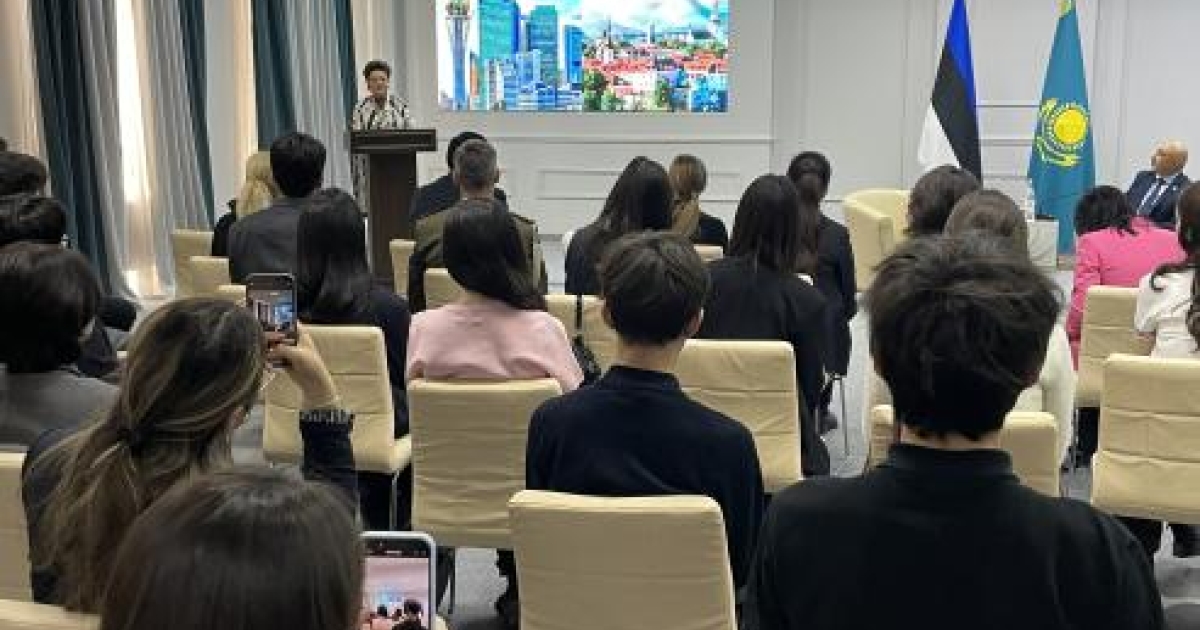
“As a mother and a grandmother, I know that what children need more than anything else is a safe and supportive environment,” she said. “The UN Convention on the Rights of the Child affirms that every child has the right to be protected, and that it is our responsibility as adults to ensure such protection is respected.”
She noted that Estonia has set the promotion and protection of children’s rights as one of the core themes of its second term on the UN Human Rights Council from 2026-2028. “This is both our chance and our obligation to defend the rights of those who cannot defend themselves,” she remarked. “Children should never be used as weapons in wars and conflicts. Estonia will focus in particular on eliminating violence against children, ensuring access to high-quality education and protecting children in armed conflicts and the digital environment.”
Meeting with Kazakh youngsters, Sirje Karis also spoke about the AI Leap programme that was launched in Estonian schools this autumn, underscoring that face-to-face communication is just as important as the smart use of the opportunities that AI affords.
As the patron of the Estonian SOS Children’s Village and the Estonian Maternity Hospital Fund, Sirje Karis emphasised the significance of viewing every child in need of help and support as an individual. “I have seen how profoundly a child’s future is shaped by the world around them,” she said. “The lives of so many of the young residents of the SOS Children’s Village have changed because of their stable and caring environment and because they have been surrounded by people who believe in them.”
The spouse of the President of the Republic highlighted how vital it is to foster youngsters’ talents and the key role that extracurricular education plays in this. She also noted how important it is to address the mental health of children and teenagers, outlining the steps Estonia is taking in this area. “The mental health and functioning of every child is underpinned by them knowing that they are seen and heard,” she explained.
During her time in Kazakhstan, Sirje Karis also met with students and lecturers at the Kazakh National University of Arts and visited Secondary School no. 103 in Astana. In addition, she attended an exhibition dedicated to the 500th anniversary of Estonian books and the unveiling of an Estonian literature corner and a glove-themed exhibition of the Estonian National Museum. The cultural programme for the visit also included three concerts by the VHK String Orchestra and violinist Hans Christian Aavik.
Gallery (Raigo Pajula, Office of the President of the Republic): https://flic.kr/s/aHBqjCASku