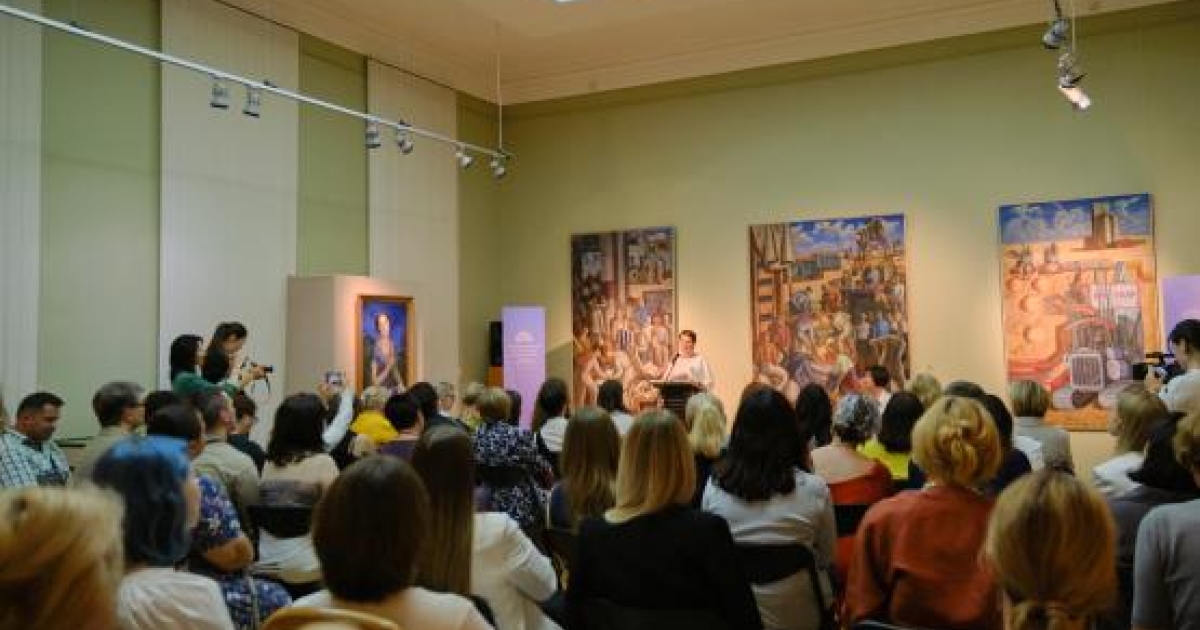
Thank you for welcoming me here in this wonderful museum. I truly feel at home in places like this, because I have spent most of my life working in museums.
This also means I have spent much of my life convincing people that today’s museums are not simply places where old things are displayed behind glass. Museums today are far more. They are informal community centres, educational institutions, and contributors to societal well-being. They have the power to address some of the great challenges of our time — from providing equal access to education to supporting mental health and social inclusion.
Of course, convincing people of this has not always been easy — sometimes not even within museums themselves. But when we see new initiatives take root and succeed, it is the greatest joy. Especially, when young visitors leave with their eyes shining, saying they truly learned something new, that their world has expanded, and that they want to come back again — then we know we are on the right path.
Estonians are the most active museum visitors in the European Union. For us, visiting museums is not just a pastime — it is a tradition that begins at an early age. This is why educational activities have become a crucial part of every modern museum in Estonia. Offering thoughtfully designed educational programs is no longer an optional extra — it is a necessity.
And when these activities are integrated with school curricula, the benefits multiply. Numerous studies confirm that museum-based learning has effects that go well beyond the subject of the exhibition itself. It strengthens critical thinking, creativity, and collaboration. It is learning by doing, learning by experiencing, and learning together.
Informal education — including museum education — is also a great equaliser. It creates safe spaces for learning that are open to everyone. It fosters talent, nurtures creativity, and provides opportunities for children and young people regardless of their background or circumstances.
One area where museums are playing an increasingly important role is mental health. We know that mental health challenges among young people are growing, everywhere in the world. And we also know that museums, as spaces of reflection, discovery, and creativity, can help. Research has shown that visiting museums and taking part in informal education programs can significantly improve the mental well-being of young people.
A recent study in Estonia gave us a surprising result: visitors said they expect museums to contribute directly to their health and well-being. This was a revelation, because most museums and libraries have not promoted this role, even though steps in that direction have already been taken. For example, libraries in Estonia now lend musical instruments and sports equipment, and organize workshops on health and nutrition. Museums too are exploring similar initiatives — though often quietly, without putting this contribution in the spotlight.
On the international level, the understanding that museums have an important role to play in improving health and well-being is no longer new. Around the world, it is increasingly recognized that many of society’s greatest challenges are linked not only to healthcare, but to broader social conditions: obesity, loneliness, and especially mental health. These cannot be solved by medicine alone. They require a collective effort, connecting many parts of society — including museums.
If we accept the view that health is a shared responsibility, then it becomes natural that museums, libraries, schools, and other cultural institutions step forward to contribute. Museums, with their ability to inspire, to create safe spaces, and to connect people with ideas and with each other, are uniquely well placed to help.
Ladies and gentlemen, museums are not relics of the past. They are bridges to the future. They educate, they support, and they heal. They give young people not just knowledge, but also joy, confidence, and hope.
That is why investing in museum education is not just about preserving culture — it is about strengthening society. It is about building healthier, more equal, and more resilient communities.
Thank you!