Minister of Transport and Communications Juras Taminskas,
Director General of the Klaipėda State Seaport Authority Algis Latakas,
Excellencies,
Ladies and Gentlemen,
Just under a hundred years ago, Mikalojus Konstantinas Čiurlionis created his Sonata of the Sea, inspired by the waves of the Baltic Sea. Only a few years later, in Estonia, Nikolai Triik painted the national romantic masterpiece Lennuk, centred on the ship of the hero of Estonia’s national epic.
These two works speak of the sea as something far greater than a body of water. For both Estonians and Lithuanians, the sea has long symbolised freedom, openness and opportunity. It has connected us with the wider world and helped shape our identities.
History has taught us that the sea can both unite and divide. We have witnessed times when seas became borders rather than bridges. Those are times we never wish to see again. That is why we work together every day to safeguard freedom, security and peace in our region, and to ensure that aggression can never determine the future of any nation – either in Ukraine or anywhere else.
The Baltic Sea has also been a route to safety. Across its waters, people have fled war, violence and oppression, embarking on new journeys filled with hope.
Today, in addition to ships, our countries are connected by undersea cables,
energy infrastructure and communications networks. This gives us a shared responsibility to keep this sea safe, clean and thriving.
Ladies and Gentlemen,
Coastal ports have long ceased to be merely hubs for the movement of goods. They have become centres that help shape the energy transition. That is why it is particularly encouraging to see the Port of Klaipėda taking an important step towards the future by establishing Lithuania’s first green hydrogen production facility.
Hydrogen has an important role to play in building a cleaner and more sustainable energy future. It helps reduce dependence on fossil fuels, strengthens energy security, and opens new possibilities for lowering the environmental footprint of shipping and transport. These are precisely the kinds of solutions that bring together economic development, innovation and environmental responsibility.
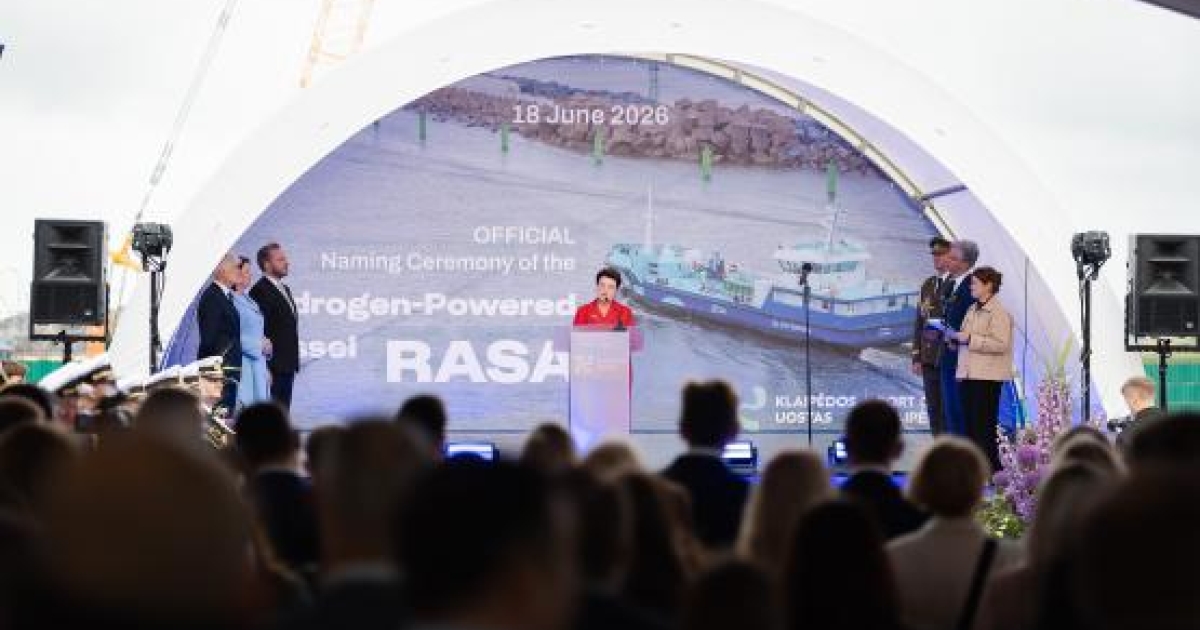
I am especially pleased that the hydrogen-powered tanker Rasa, built by the Estonian company Baltic Workboats, will contribute to this progress. This vessel is an excellent example of how Estonia and Lithuania can work together to create solutions that shape the future while strengthening the competitiveness and sustainability of the entire Baltic Sea region.
Today, we are witnessing a new beginning. A beginning that will bind our countries even more closely together and that carries with it hope and renewal. Much like the morning dew – rasa in Lithuanian – which is associated with purity, nature and new beginnings.
In both Estonian and Lithuanian culture, nature has always held a special place. Water, springs, dew and the life they sustain have been important elements in the traditions of both Baltic and Finnic peoples. I hope that Rasa will carry these values forward: care for nature, faith in innovation, and the conviction that the most enduring solutions are developed through cooperation.
Dear Diana,
Thank you for your kind invitation to your hometown, and that of President Nausėda. We both come from port cities, and you have an especially close connection to the sea through your family roots, as the daughter of a long-distance sea captain. It is a great honour and a genuine pleasure for me that today we can stand together as godmothers to Rasa.
May her name carry purity and lightness. May her voyages be safe and her work successful.
Dear Captain and crew, I wish you every success with your new vessel.
Thank you.