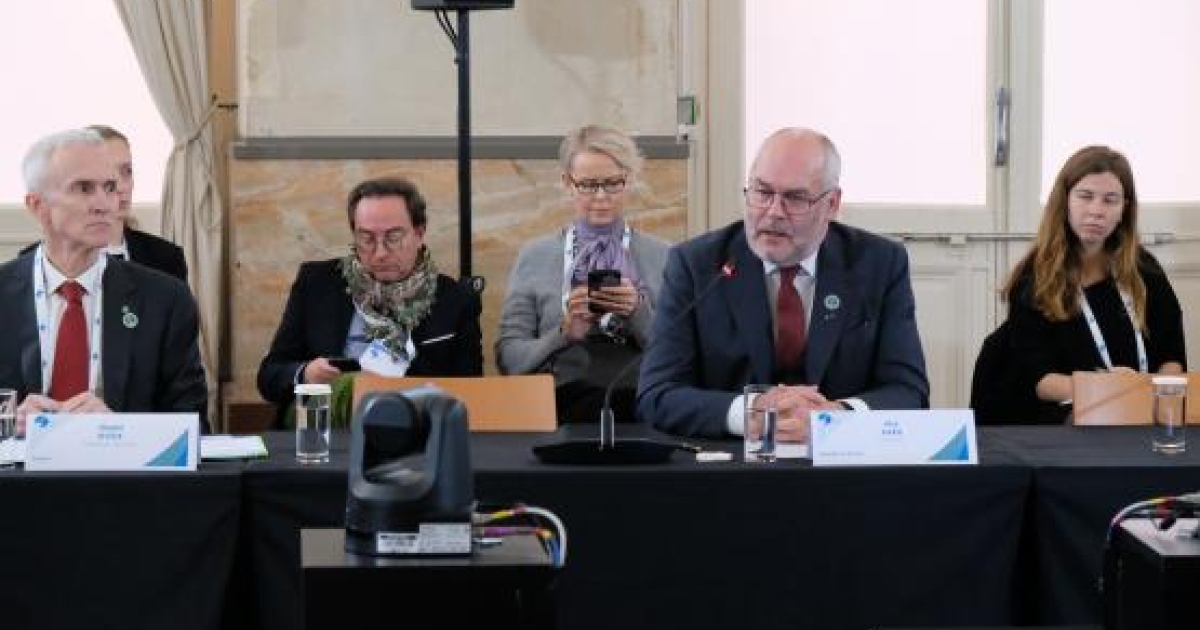
Because this is how our planet works, everything is connected. In the 21 century, all spheres of life will be impacted by climate change and we need to consider the environment in everything, from music to mathematics. So let our education reflect this.
I would go even further. Climate change is not the only pressing environmental problem. We are also losing biodiversity, our soils are degrading and waters are polluted. These issues are connected to the changing climate but also have other man-made causes.
Therefore, the education needs a wider program of sustainability that will guide us to an understanding of the causes and impacts of various environmental problems, their possible solutions and ways of adaptation.
How to do it? In Estonia, we have made sustainability a horizontal theme in the school curricula. We also have a country-wide network of environmental education centres. Starting from kindergarten, government funding supports the visit of each child to these centres with their class at least once a year. These centres also provide non-formal education.
20 per cent of Estonian schools and kindergartens are members of the Eco Schools Global programme which means that they follow sustainability principles in all their activities. The teachers confirm that these activities create among the children a positive attachment to nature. And this is a good first step towards environmentally friendly behaviour.
However, there is still a lot to learn about how to create the necessary behavioural changes. For this, let us also fund research on environmental education.
Next to young people, we must also not forget adults. On the one hand, we must make sure that the public debate on climate change is based on scientific facts and best available knowledge. The development of critical thinking and scientific literacy skills is a life-long exercise.
On the other hand, also adults need experiences that make the human impact on environment visible. Here, we have the example of Let’s Do It. What started as a trash collecting campaign in Estonia in 2008, has now grown into one of the biggest global environmental movements.
On World Cleanup Day, in September every year, millions of people work together to make our planet cleaner. The organisers have noticed that when at least five per cent of the population participates in the campaign, the whole public opinion starts to shift towards more environmentally friendly attitudes and behaviours.
Again, collecting trash will not solve all our planetary problems but it is a good start for recognizing the human impact to the environment and thinking about what measures are effective.
We now need a similar campaign for digital waste, making us conscious of the footprint of our digital activities. Estonia, as one of the pioneers of digital public services, feels a responsibility to raise awareness on the environmental impact of our digital life.
All those unnecessary e-mails, photos and cloud documents consume energy. As we know that reducing consumption is one of the most effective ways to mitigate our impact to climate, why not start there.
Ladies and gentlemen! We need education because our impacts to the environment and the related feedback loops are often not immediately visible and obvious. We need a trained eye and contextual knowledge to realize, for example, that the summer temperatures, that some parts of Europe are experiencing right now, are not a nice thing but a harbinger of dangerous changes.
Estonia is proud of its educational system but I must admit that a lot more can be done to support environmental education. Let us share best practices and jointly support evidence-based sustainability education.
Thank you!