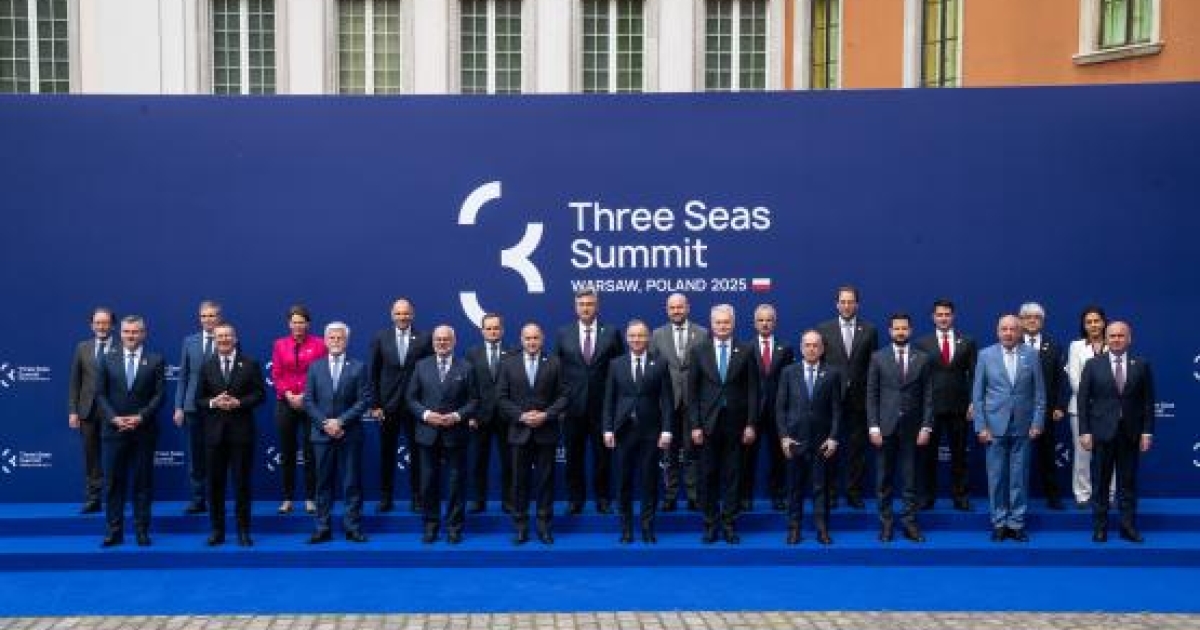
It is my pleasure to note, that 10 years since its inception, the initiative still holds a strong traction. I welcome our new partners Turkey, Spain, Albania and Montenegro who have joined us today.
As we reflect on the Initiative’s success so far, it’s important to recognize the tangible impact it has had on the economies, energy systems and infrastructure of the participating countries, as well as the broader European and international landscape. The first Three Sees Initiative Investment Fund has been reasonably profitable and should attract private investors to raise their contributions, to help us use private capital to speed up the fulfilment of our goals. Estonia also supports the creation of a Three Seas successor fund for infrastructure investments.
The heart of the Three Seas Initiative is its focus on improving infrastructure connectivity. A future where roads, railways, energy networks and digital connections seamlessly link our nations is not just an ideal – it’s an imperative. By investing in projects like the Rail Baltica, Via Baltica, Via Carpatia and many others, the initiative is building the foundation for a more integrated region - more connected people, goods, and energy sources, more resilience to external pressures, more competitiveness of our economies.
In the future, we must double down on this focus. The world is becoming increasingly interdependent and Europe must ensure its infrastructure is up to date. The Three Seas Initiative can serve as a catalyst for the digital economy by improving high-speed internet connectivity across the region, fostering innovation and creating new opportunities for businesses to grow and thrive.
Today, but even more in the future, one of the most transformative technologies shaping the world is Artificial Intelligence (AI). Estonia has embraced AI as a cornerstone of its digital future – helping to improve efficiency, provide more personalized services, and predict future challenges.
Within the Three Seas Initiative, AI can become a key component for the region’s development. By integrating AI into areas like smart cities, logistics and energy management, we can build a more efficient, sustainable and resilient region. For instance, AI-driven energy management could enable us to optimize our energy grids, reduce waste and enhance reliance on renewable energy sources.
For Estonia, it’s clear, that our infrastructure has to rapidly adapt to the changing geopolitical reality. A year ago, I spoke about the synchronisation of our electricity system with the Central European networks, a task that is by now successfully achieved. I want to thank all our partners for supporting this project over the years. Secondly, connecting South and North is the essential aim of this initiative, and we strive to complete the Rail Baltic railway connection by 2030. By the end of this year, half of the main line in Estonia will have entered construction phase. This is the most important transport corridor in the NATO Eastern flank.
Dear friends,
Our resilience is based on alliances and reliable infrastructure. Our credibility depends on the outcome of Russia’s war in Ukraine. To help Ukraine, we must use all tools available, including the 3SI. Rebuilding, modernising and increasing its rail, road and energy connections with the EU must remain a priority.
Incidents involving underwater infrastructure in the Baltic Sea highlight our vulnerabilities. Fortunately, due to diversification, these events had no impact on consumers’ daily lives. Nevertheless, we must bolster our resilience through effective monitoring systems, rapid response capabilities, and strong cooperation — including with NATO.
Looking to the future, the Three Seas Initiative can play an even more pivotal role in Europe’s transition to clean energy. The region has vast potential in renewables - whether it’s wind energy in the Baltic Sea or solar and geothermal power in the Central and Southern Europe. By investing in energy projects that are sustainable, the Three Seas Initiative contributes to fulfilling EU’s climate and energy targets. However, we require a renewed commitment to regional energy cooperation within 3SI and beyond, in order to connect our markets, reduce costs for project development and increase energy security.
The future of the Three Seas Initiative is also intertwined with global partnerships. The United States has been a strong supporter of the initiative, sharing its strategic goals. It will be essential to maintain these transatlantic ties, ensuring that the Three Seas Initiative aligns with the broader goals of global peace and international order.
At the same time, the initiative offers an opportunity for broader cooperation with global partners, including countries in Asia and beyond, that are eager to invest in the region’s growing potential, such as India. By positioning the Three Seas Initiative as a gateway for investment and innovation, we can unlock new opportunities and solidify the region’s place in the global economy.
Democracies deliver, and the Three Seas Initiative plays a vital role in supporting this effort. I extend my best wishes to our Croatian friends as they prepare to host the next Summit.
Thank you!