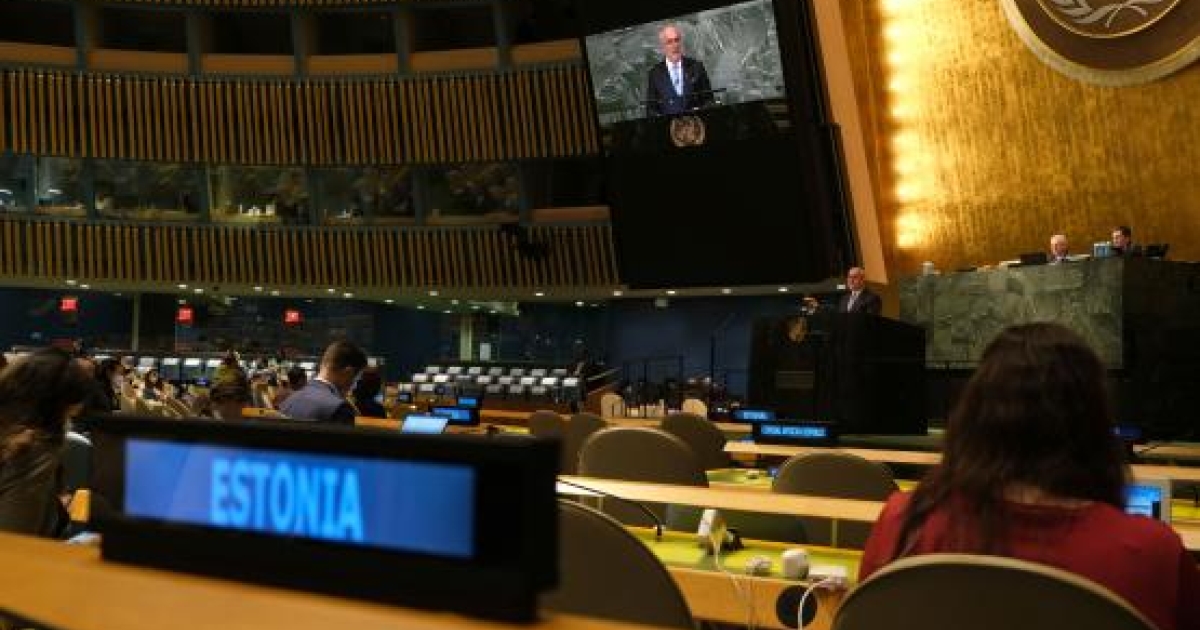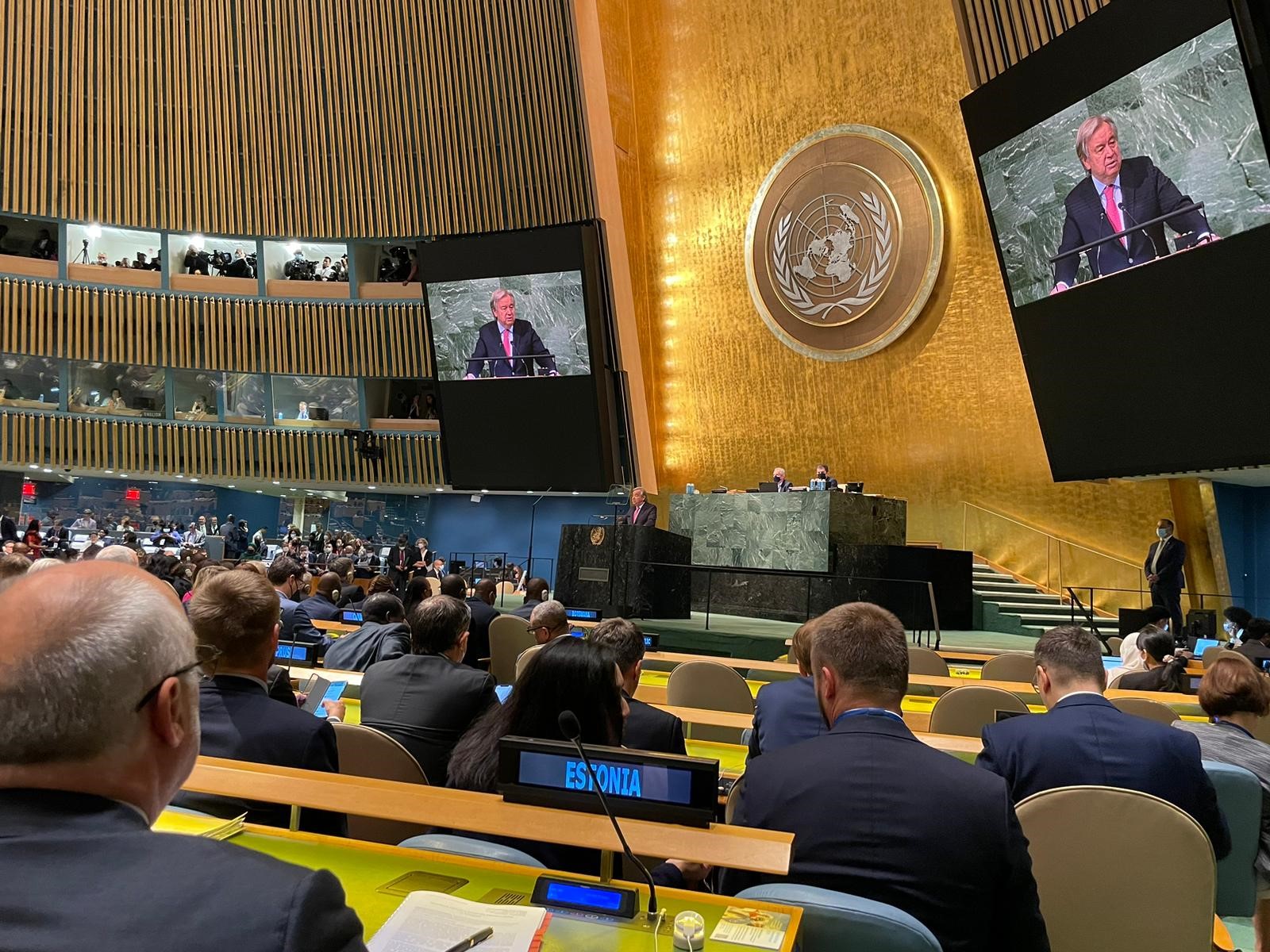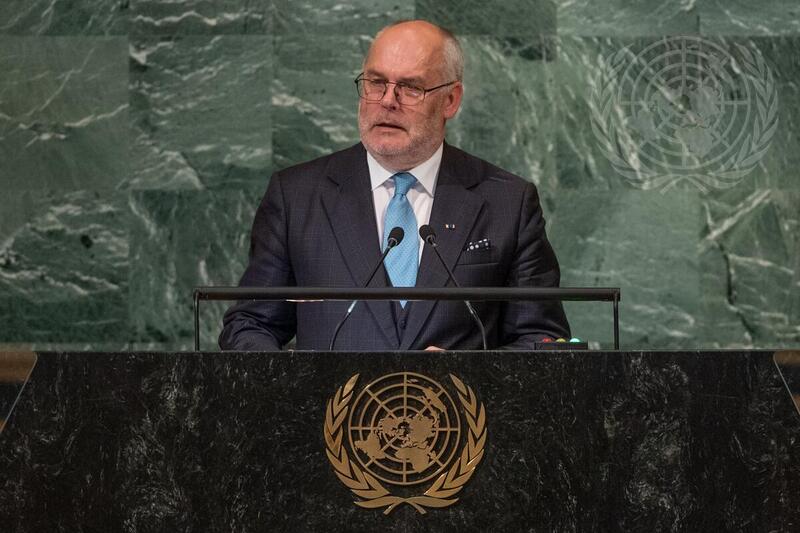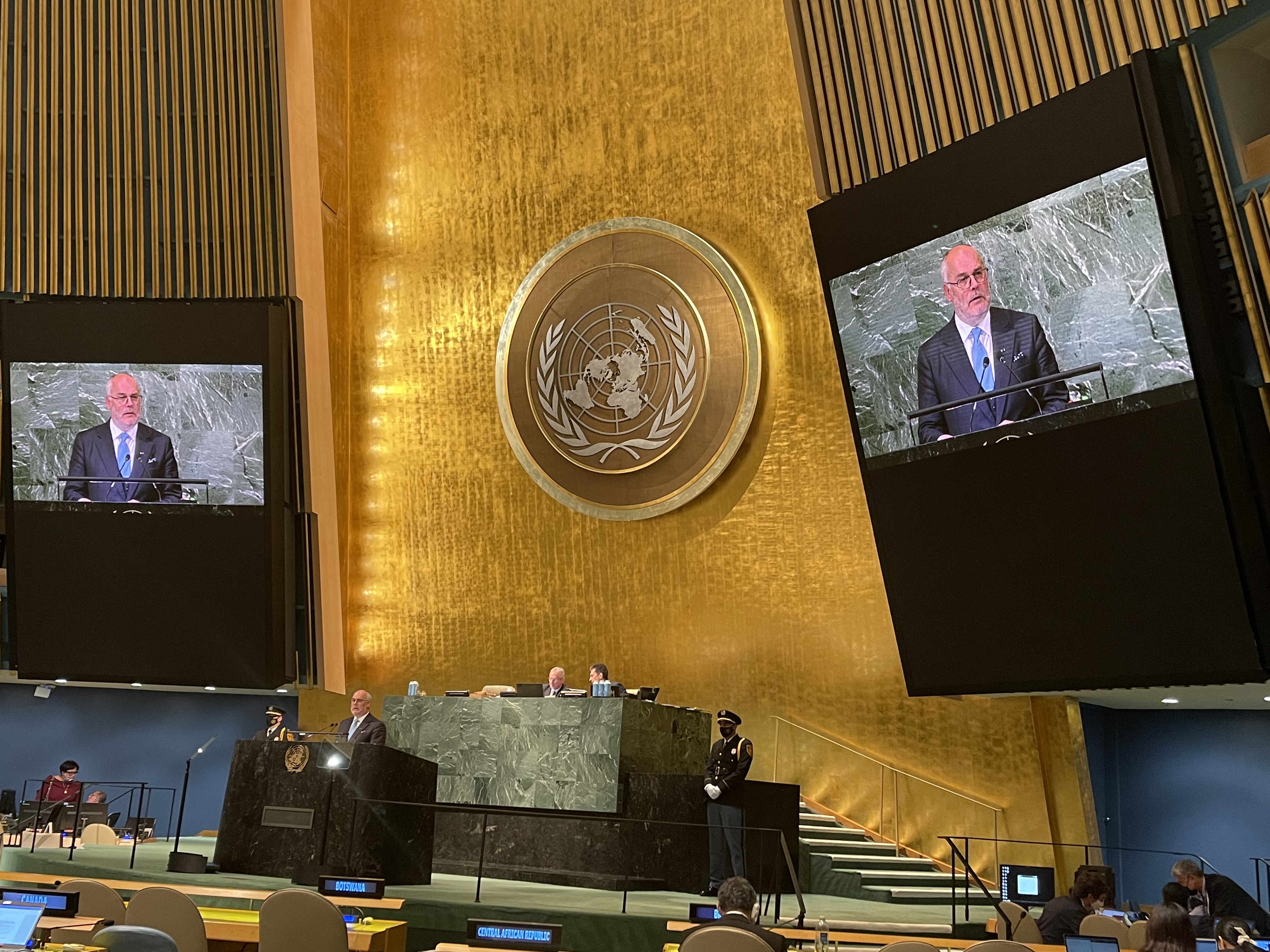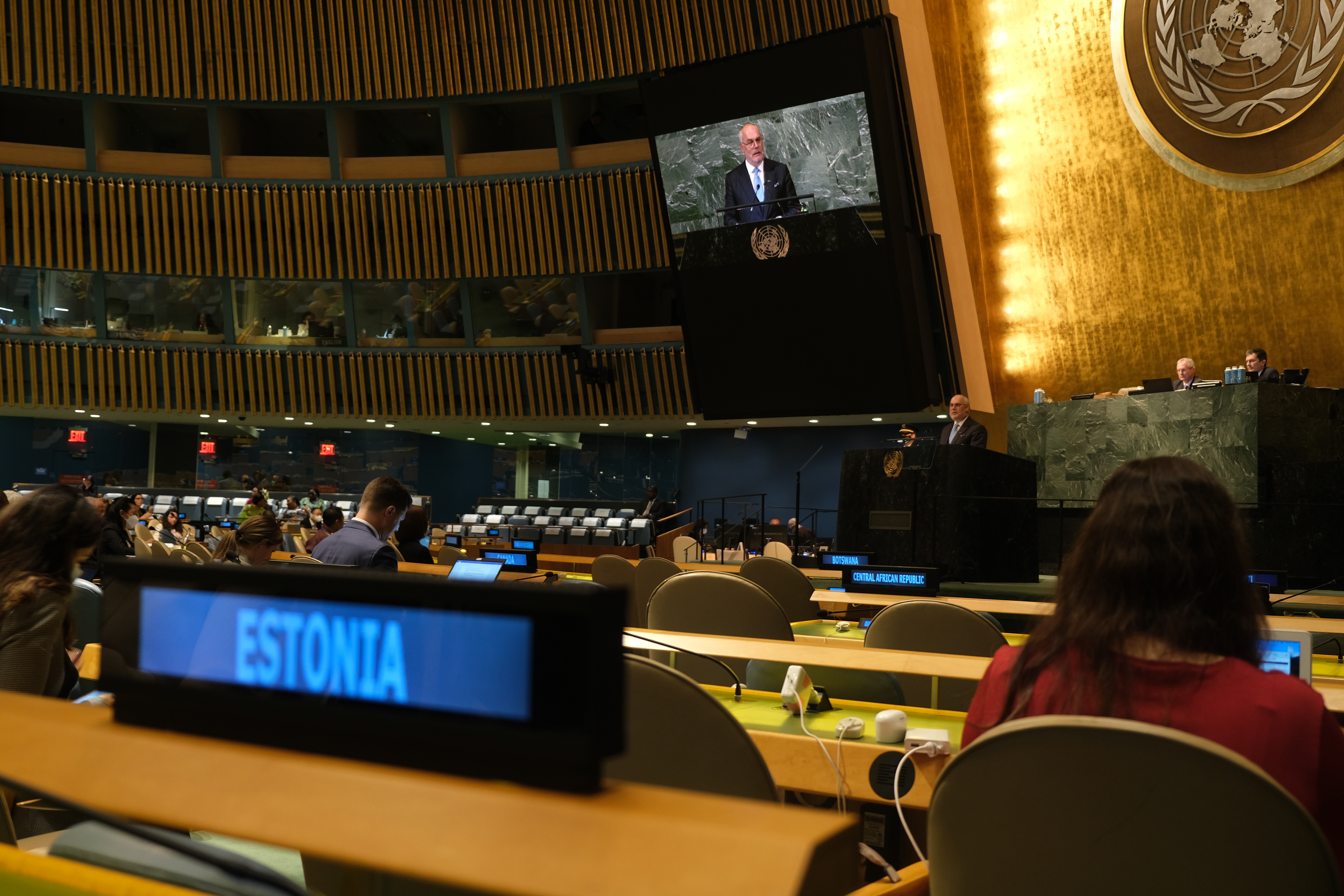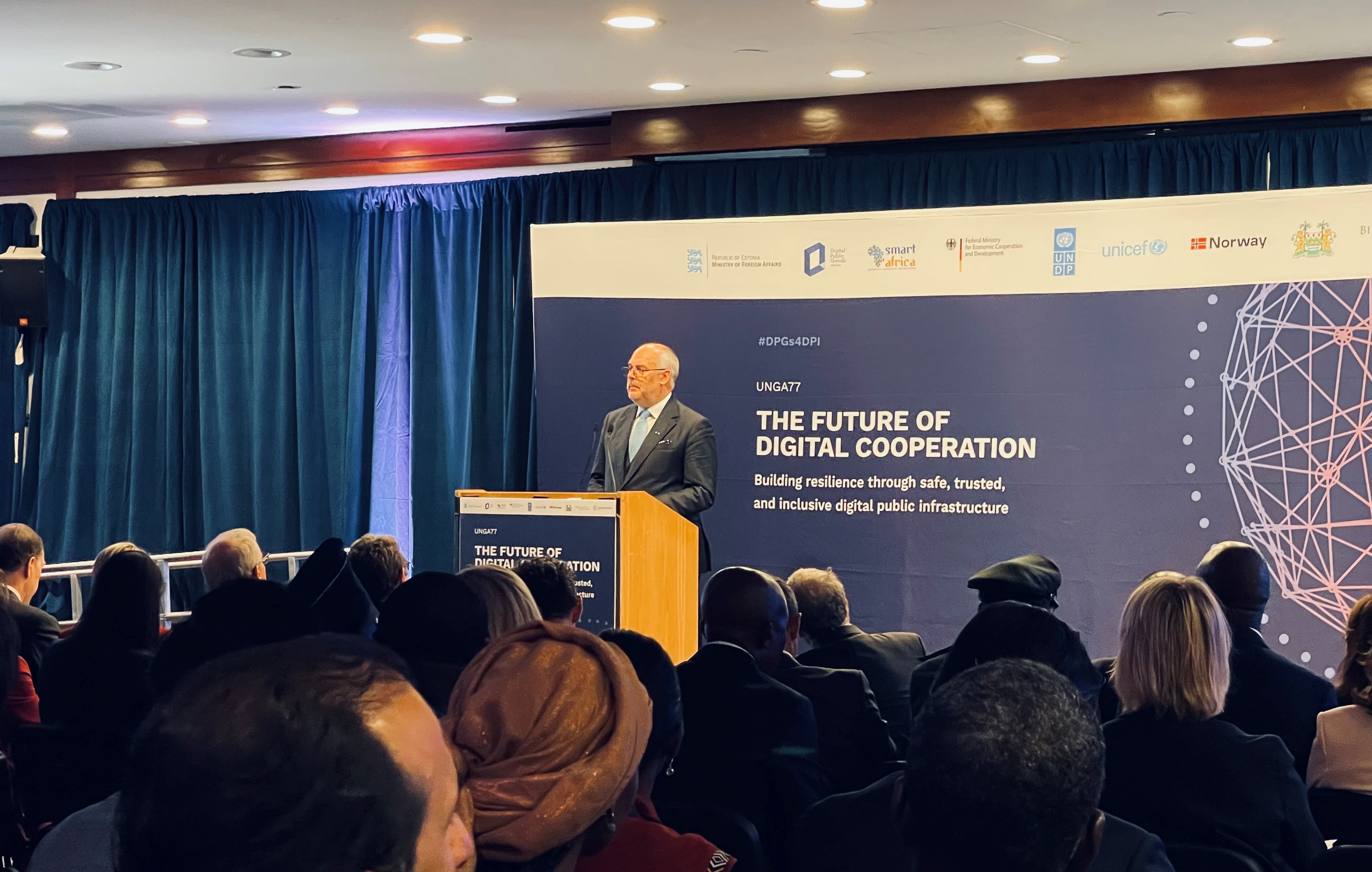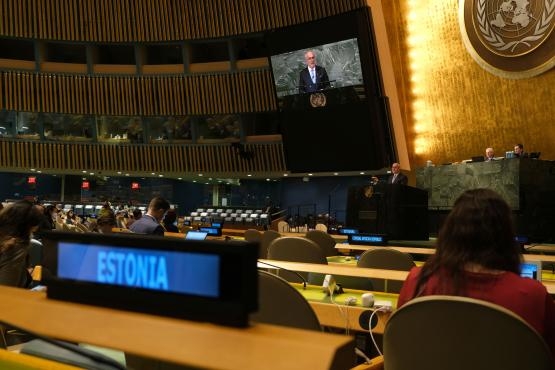
President Karis noted that at a time when Ukraine is fighting for the values set in the UN Charter – freedom, democracy and human rights – the Security Council, a body at the heart of the UN bearing the main responsibility for maintaining international peace and security, has been paralysed and unable to play its role.
According to him, Estonia has always been a strong proponent of curbing the absolute veto power in the Security Council, and even more so when it has been used to cover war crimes and crimes against humanity. “I am glad that the General Assembly adopted by consensus a landmark resolution, the so-called veto initiative this April, which provides the UN General Assembly an opportunity to step in when the UN Security Council is unable to act. The question remains, how can we accept that the aggressor has veto power in the Security Council?” President Karis added.
According to the Estonian head of state, Russia’s brutal and unjustified military aggression against democratic, peaceful and sovereign Ukraine is the most serious threat to global peace and security since the end of the Second World War. “It is our common duty to push back the ugly manifestations of imperialism, colonialism and racism by Russia. Russia must understand that the road they have taken is disastrous and the war they have started cannot be won. If we stop caring, if we get tired, if we fall into indifference, the aggressors and criminals will only be empowered. This is not the world we want to live in nor the world we want to leave to future generations,” concluded President Karis. When condemning Russia’s war crimes, President Karis asked the UN General Assembly, “Are we living in the 21st century?”
He proceeded to express his deep concern about the situation in one of the world’s largest nuclear power plants, Zaporizhzhia Nuclear Power Plant. “Russia has occupied the plant and turned it into a combat zone. The risk of a nuclear disaster is very real. This power plant should be demilitarised without delay, and full control of the plant returned to Ukraine,” President Karis stressed.
The Estonian head of state added that it is essential to grant IAEA experts continuous and unfettered access to the facilities of the power plant.
President Karis also drew attention to the importance of cybersecurity, which Estonia has been very vocal about in the UN. “Russia has demonstrated how state-provided malicious cyber tools are used alongside conventional weapons. Russia’s cyberattack against the satellite communications of Ukraine on 23 February served to prepare and facilitate Russia’s on-the-ground invasion,” said President Karis.