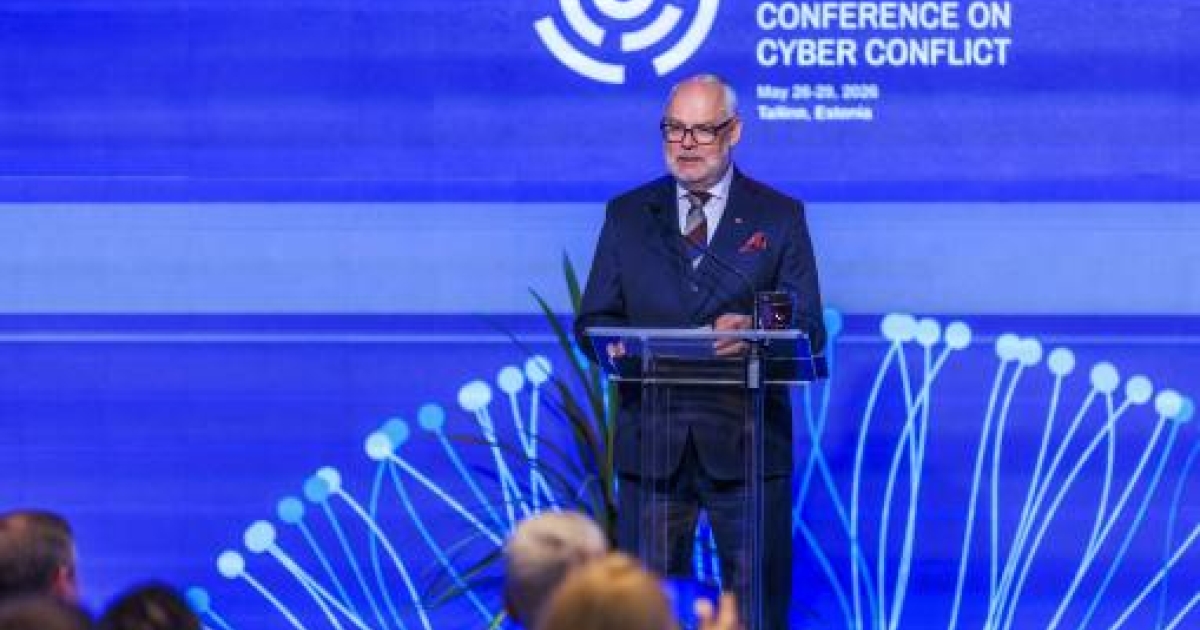
President Karis stressed that in the current geopolitical situation, the resilience of society has become one of the central pillars of Estonia’s security. “Cyber conflict is not just confined to cyberspace,” said President Karis. “Cyber operations can disrupt hospitals, cause financial damage, sabotage critical infrastructure and interfere with democratic processes – all from thousands of kilometres away.”
According to the Estonian head of state, responding to such threats requires a secure digital infrastructure, rapid recovery and strong institutions, but public trust and social cohesion are equally important. “This is the only way to ensure that hostile forces cannot undermine our stability, democracy and future,” said President Karis.
The head of state also addressed the growing impact of artificial intelligence on cybersecurity. According to him, AI is of strategic importance to Estonia as the next step in digital development that can strengthen innovation and long-term competitiveness. At the same time, he warned of the dangers of using AI. “We are already seeing phishing campaigns, disinformation operations and deep fakes created with AI that can imitate political leaders with alarming realism,” said President Karis.
According to the President of the Republic, AI can also become one of the most powerful cyber defence tools, as it makes it possible to detect attacks in real time and support rapid countermeasures. At the same time, the Estonian head of state stressed that technology is not a substitute for human decision-making. “Investing in cybersecurity also means investing in people,” said President Karis, referring to the need to increase the number of cybersecurity specialists, strengthen education and raise public awareness.
He also highlighted the importance of international cooperation, citing cybersecurity as one of the most international dimensions of security. “Cyber threats know no borders and no country can tackle them alone,” said President Karis. He stressed the importance of information sharing, joint exercises and strengthening international standards to protect cyberspace and critical infrastructure.
President Karis also welcomed the fact that the NATO Cooperative Cyber Defence Centre of Excellence in Tallinn continues to grow after Albania, Finland and Sweden joined as new members. The centre of excellence has become an important hub for cyber cooperation between allies, he said.
Photos (Karli Saul/Office of the President of the Republic): https://flic.kr/s/aHBqjCUWze