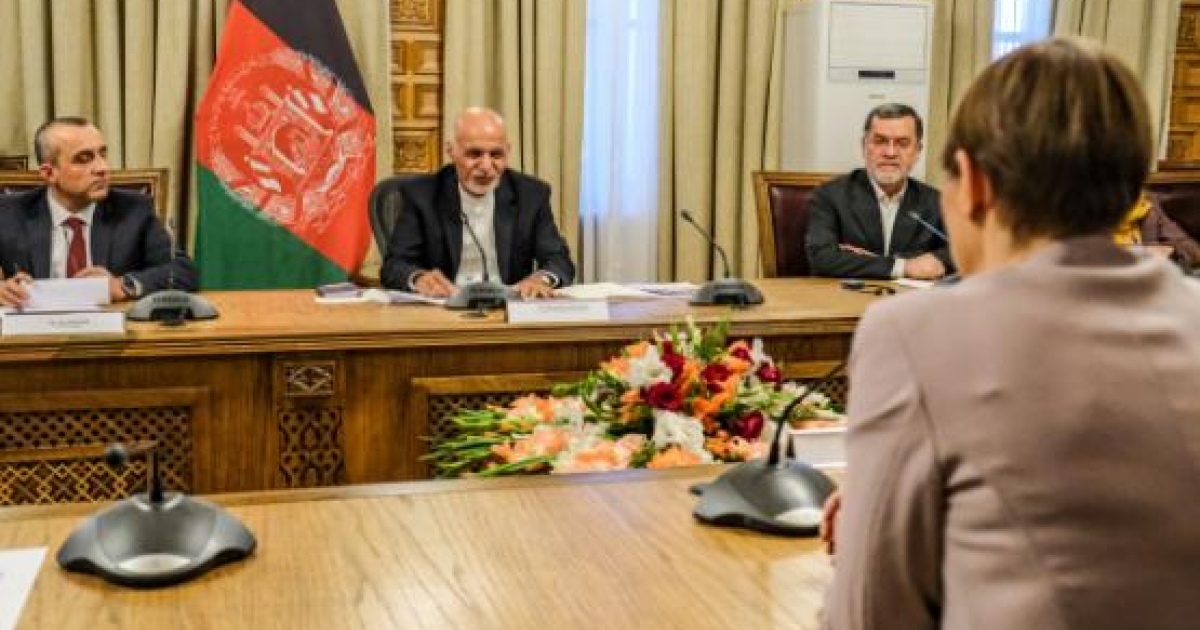
“Allied forces have been in Afghanistan for almost 20 years,” President Kaljulaid remarked after her meeting with her Afghan counterpart. “Coming here in 2001 was justified, just as withdrawing from the country now is right and justified. We must be honest and admit that not everything about the mission has been a success, but Afghanistan today is without doubt a better and more effectively functioning country and society than it was two decades ago.” For his part, President Ghani thanked the people of Estonia and the country’s defence force personnel for their long and difficult contribution, which he said had assisted with Afghanistan’s development, and expressed his condolences to the families and friends of the Estonian soldiers who had lost their lives in the country.
President Kaljulaid said that future efforts by allies and Afghanistan itself should primarily be aimed at curbing violence and bringing fighting to an end. “We have to do everything we can to achieve tangible results in the ongoing peace process, and I call on all of the parties involved to work towards that end,” she said. “Afghan society faces a plethora of problems, but war is not the answer to any of them. The role that the UN and aid organisations play must increase if we want to prevent the country from sliding backwards, but to do that we have to ensure their safety. Responsibility for this will now increasingly rest with the Afghan state and its security forces. One of the main places we can and must have these discussions is at the UN and on the Security Council, where Estonia is taking the leading role on Afghanistan at the moment. During our time on the council, we want to drive the issue forward to actual steps being taken.”
President Kaljulaid also stressed that Afghanistan must not vanish from the human rights and democracy radar. “Women’s involvement in society, the quality and availability of medicine and education, the principles of human rights and the rule of law, the situation with press freedom – progress has been made in all of these areas over the last 20 years,” she said. “Making sure this continues is one of the prerequisites for a functioning Afghan state and the further development of Afghan society. Estonia will continue to champion these values on the UN Security Council, within the European Union and in bilateral relations.”
Meetings were also held in Kabul today between the Estonian head of state and the leader of the High Council for the National Reconciliation of Afghanistan Abdullah Abdullah and Foreign Minister of Afghanistan Haneef Atmar, with whom the security situation in the country and its future prospects were again discussed. Another topic raised at all of the meetings was Estonia’s willingness to share its e-state experience, in which the Afghanis showed a keen interest. President Kaljulaid also met with President Ghani’s wife Rula Ghani, with whom she primarily discussed opportunities for digital cooperation and the greater involvement of women in the organisation of social life in Afghanistan.
President Kaljulaid’s final meeting today was with the commander of NATO’s Resolute Support Mission and United States Forces in Afghanistan General Austin S. Miller, with whom she discussed cooperation on the Afghan mission to date and the withdrawal of allied forces from the country. “We came here together and we will be leaving together,” she remarked. “We have fought side by side, we have shared in successes and we have both suffered losses. Without this mission, I very much doubt whether we would have the relationship we currently enjoy with our allies – it has made Estonia safer and more protected as well. It is clear now that the withdrawal of allied forces from Afghanistan will add to the tension in the country, so it is important that we work together to ensure the safety of the withdrawal process as a whole and its logistics.” President Kaljulaid confirmed that Estonian defence force members would continue to contribute in Afghanistan for as long as needed in the course of the coordinated withdrawal.
Communications Department
Telephone: +372 631 6229
[email protected]