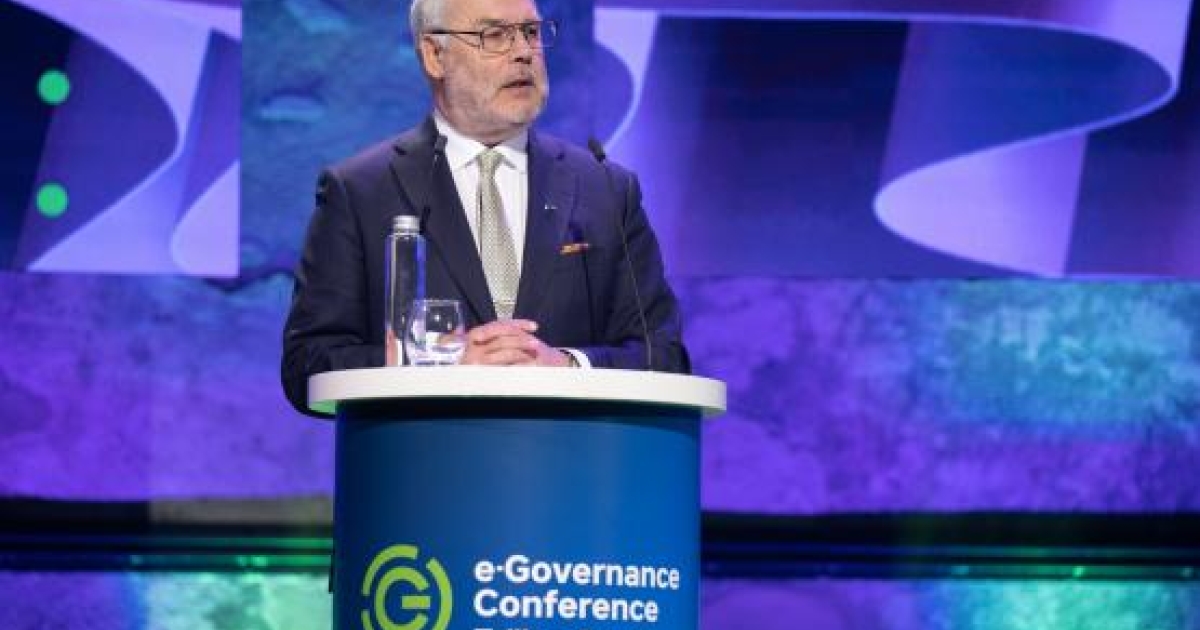
Distinguished ministers, dear guests!
It is an honour to be part of this historic event!
Indeed, I am calling the event historic. Not because it is the first time that I am participating. Rather, because what we do here will eventually be of interest to historians. This has already happened in Estonia. Our digital transformation process got into full swing some 25 years ago. Now it has reached a phase where our experience is being studied by scholars of modern history. When this happens in your country, you know that it is a good sign – because it is an indication that you have succeeded in transforming your nation.
I am aware that the Estonian transformation process is a model to many. In my previous position as the Auditor General of Estonia, I had the privilege of participating in weekly cabinet meetings. My first-hand experience of the famous Estonian e-government was, indeed, that it enabled the government to function quickly and effectively. This was a small, but important part of the total transformation.
However, these days there is a lot more to consider than just effectiveness. The theme of the conference is resilience. You have already heard of examples from Tonga and Ukraine – describing how digital infrastructure can and must survive natural disasters and war, keeping the country functional despite heavy damage on the physical infrastructure. In order to succeed even through less dramatic situations, resilience needs to be built into the digital systems from the start. It must be a design principle.
In the same way, the design of digital systems needs to consider their environmental footprint. Similarly to how we already think about sustainability when transforming our energy systems, transport or agriculture, we need to make green thinking a guiding principle in the digital sphere. Sometimes digitalising systems or using smarter solutions can already bring significant advances that support the green transition.
But we must be aware that all digital activities also generate emissions. Servers consume huge amounts of energy; every e-mail that you send, every file that you store in the cloud has an environmental footprint. The Estonian-born global initiative Let’s Do It World has been organising the annual Digital Cleanup Day to make us aware of the amount of digital trash that floats in the hyperspace and unnecessarily wastes energy. We as individuals can clean our inboxes and cloud folders regularly, we as governments can design digital systems that provide benefits to citizens without creating additional burden for the environment.
Let us think about it this way – this conference discusses how to make digital services seamless and resilient. The services that our planet provides are often so seamless that we hardly notice or acknowledge them. It is time that we pay more attention to the resilience of the planet as well so it does not collapse.
This is a challenge that even the most digitally advanced nations are struggling with. We in Estonia are optimistic that the skills and mindset that enabled us to build the e-Estonia success story can also take us forward to a more sustainable future. As with all such transitions, it is never simply about new technologies, but equally importantly about public trust, good collaboration between the public and private sectors, a strong education system and a general ecosystem of innovation.
I wish you fruitful discussions in the spirit of historic transformations!
Thank you!