PRESIDENT OF THE REPUBLIC RESOLUTION
No. 282
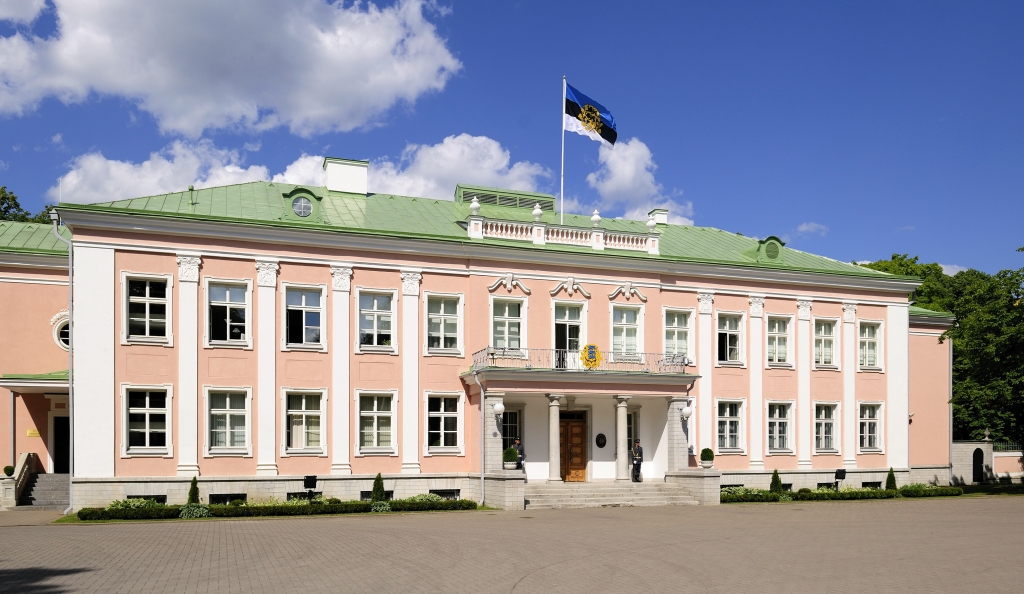
Kadriorg, 7 March 2023
Refusal to sign into law the Act Amending the Building Code, the Building Code and Planning Act Implementation Act and the State Assets Act
I have declined to sign into law the Act Amending the Building Code, the Building Code and Planning Act Implementation Act and the State Assets Act passed by the Riigikogu on 15 February 2023.
In said act, § 1 (1) is legally ambiguous and therefore in contravention of
§ 13 (2) of the constitution. The act adds the following provision to the Building Code: “The publicly visible part of a building, as well as monuments, sculptures, memorials and other such structures on public display, must not incite hostility or support or justify an occupying regime or the committing of acts of aggression, genocide, crimes against humanity or war crimes.”
According to the explanatory memorandum accompanying the act, the aim of the legislation is to outlaw and remove from public space such structures which offend society’s sense of justice or represent a threat to national security. This is a legitimate aim, but the banned structures are defined in the act using an expression which cannot be unequivocally defined using ordinary methods of interpretation. One part of the sentence in particular – “support or justify an occupying regime or the committing of acts of aggression, genocide, crimes against humanity or war crimes” – is unclear.
The Penal Code already provides for the public displaying of symbols linked to the committing of acts of aggression, genocide, crimes against humanity or war crimes in a manner that supports or justifies such acts to be met with punishment (§ 1511). Since the Penal Code outlaws the act, not the object, then this creates an opportunity for every circumstance to be assessed so as to more precisely define the expression “in a manner that supports or justifies”.
The use of undefined legal terms is bound to occur in the drafting of legislation. Nevertheless, it remains entirely incomprehensible what a structure ‘supporting’ or ‘justifying’ an occupying regime actually means. Every structure erected with the support of an occupying regime as confirmation of its legal capacity may be said to support or justify said regime. Since the wording of the act is so broad, the person or body interpreting it must take the generally worded aim of the legislative authority as their starting point without the text of the act providing any more detailed guidance. However, the principle of legal clarity requires acts to be clear and comprehensible enough so that everyone understands how the state will act and can modify their own actions accordingly.
An instance of legal ambiguity is one in which questions arising in the interpreting of norms cannot reasonably be addressed by also taking into consideration the aim and background of the norms, other legal acts, general principles of law et al. and such ambiguity obstructs the determination and fulfilment of the obligations arising from the act (see point 98 of the ruling of 14 October 2015 of the Constitutional Review Chamber of the Supreme Court of Estonia in case no. 3-4-1-23-15, point 68 of its ruling of 19 December 2019 in case no. 5-19-38/15 and point 62 of its ruling of 31 October 2022 in case no. 5-22-4/13). In the case before us, the explanatory memorandum outlines the aim of the act in a way that repeats the ambiguous wording of the provision.
It is true that if an act can be interpreted in a way that conforms with the constitution, such an interpretation should be favoured. However, the principle of legal clarity would be rendered meaningless if the wording of the act were so unclear that the only guidance available to the person or body interpreting the act was the constitution. In order to avoid risk, a ban whose wording is unclear may lead to the removal of structures (or to structures not being erected in the first place) whose removal from public space is not the aim of the legislative authority. It must be possible to ascertain the obligations established by a law so that everyone is able to exercise their fundamental freedoms without fear of unexpected restrictions being derived from said law. Ambiguous bans necessitate an immoderate level of caution and engender a sense of suppression unbecoming of a state founded on the principle of freedom.
The act uses the term ‘war crime’. The definition of this term is very broad, since it takes in serious breaches of the laws pertaining to every international armed conflict. According to the Rome Statute of the International Criminal Court, war crimes include “destroying or seizing the enemy’s property unless such destruction or seizure be imperatively demanded by the necessities of war” (article 8, section 2, point xiii). The act in question does not specify whether the committing of a war crime must be judicially established. Nor does it specify whether a structure memorialising in general terms an armed conflict in which war crimes were committed also constitutes support for or the justifying of a war crime. This may be assumed, since general approval of the actions and objectives of one side in an armed conflict involves the justification of the actions taken by that side. The extremely broad definition of the term ‘war crime’ therefore pertains to the majority of armed conflicts. The person or body interpreting the act must decide for themselves which historical events to assess in the light of the act. For example, the wording does not preclude the inference that the Estonian War of Independence could be one such event.
From the explanatory memorandum it appears that the term ‘banned structures’ primarily refers to those linked to the actions of Soviet authorities. However, the ban itself is worded in much broader terms. In such a situation, the person or body implementing the act is not required to interpret the text so much as make assumptions as to what precisely the act intends due to the deficiency of its wording.
In a state that respects the rule of law, the legislative authority cannot limit itself to outlining its targets, but must carry them through with norms that provide everyone with sufficiently clear guidance.
Based on the foregoing, I am of the opinion that the Act Amending the Building Code, the Building Code and Planning Act Implementation Act and the State Assets Act submitted to me for signing into law contravenes § 13 (2) of the constitution.
I consider it necessary for the Act Amending the Building Code, the Building Code and Planning Act Implementation Act and the State Assets Act passed by the Riigikogu on 15 February 2023 to be debated, brought into line with the Constitution of the Republic of Estonia and voted upon once again by the Riigikogu.
Basis: § 107 of the Constitution of the Republic of Estonia
(signed digitally)
Alar Karis