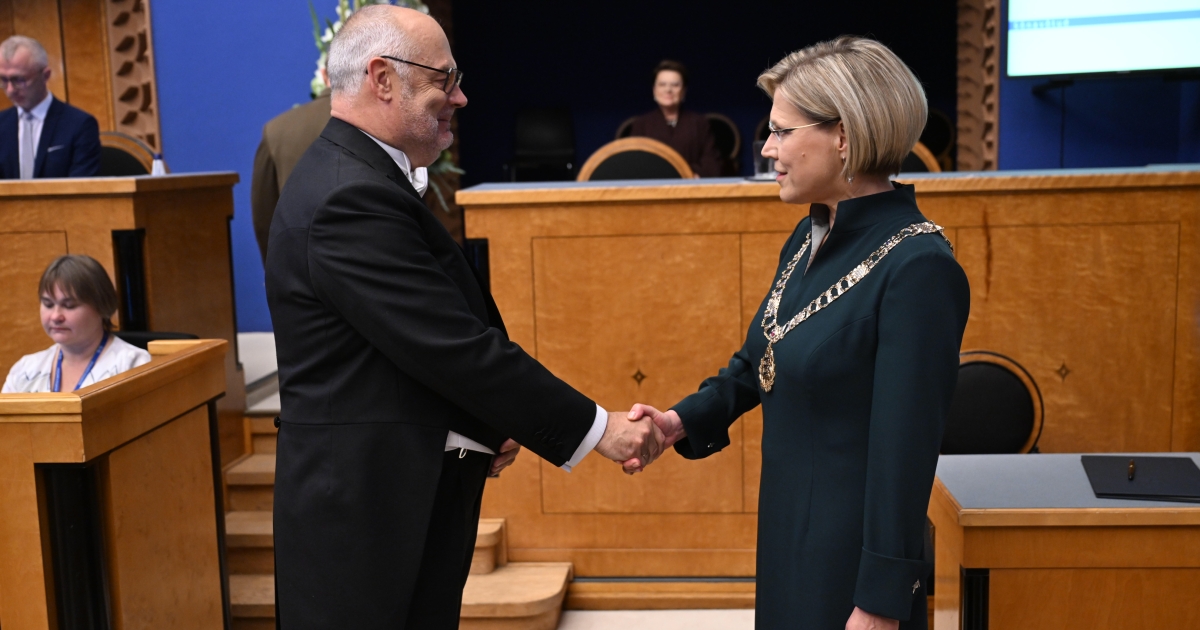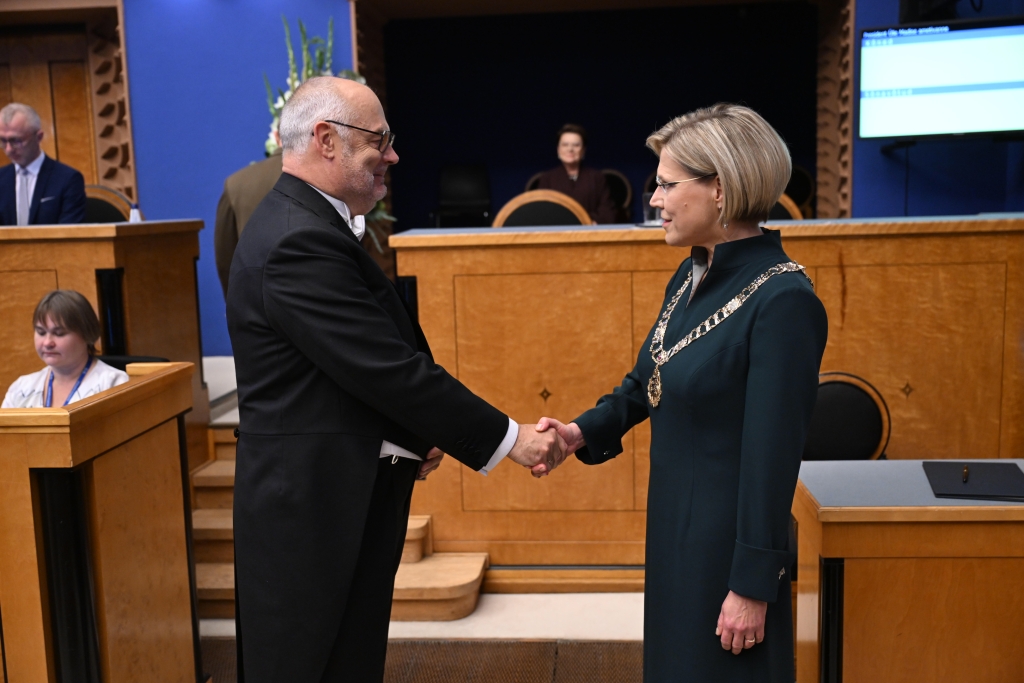
Five years ago, in this very spot here in the Riigikogu, I pledged to uphold the Constitution, to defend the internal and external peace enshrined in its preamble, and to listen and observe with patience. I spoke about a nation of people who cope, who are not afraid to face the unknown.
This we have had to do a surprisingly large number of times in recent years: the pandemic; war; inflation; the climate and energy crises; and the aggressive development of new technology in the form of artificial intelligence.
None of these challenges originated here in Estonia, but have reached us from further afield. And, as a small nation, we are affected by them even more than larger countries.
We have had to familiarise ourselves with these unknowns and, where needed, change the way we think and behave. In so doing, we have adapted and managed to cope.
What is the role of the head of state in the midst of these crises?
It is their job to be observant; to know how to listen; to unite rather than to divide; to strike a balance; to maintain diversity; to champion peace at home and abroad. At least, this is how I have understand my role.
It is easy to talk to friends, but you must also speak with those whose views differ from your own. It is easy to reel off talking points, but you have to think and act for yourself, taking local circumstances into account.
It may be memorable and impressive to be outspoken, even combative in your words, but it is achieving results that matters. And while it can be nice to hear the sound of your own voice, it doesn’t make you any smarter.
In maintaining peace abroad, we can rely not just on soft diplomacy, but also on our friends and allies – particularly those closest to us, our Nordic and Baltic neighbours. But when it comes to maintaining peace at home, we have no one to rely on but ourselves.
That internal peace begins with trust and a sense of belonging; with the attitude taken by the state; with comprehensible laws; with efforts to avoid over-regulation; with the responsibility of lawmakers, and their consideration not just for those who vote for them, but also for the wider impact of those laws and the interplay of them.
Constant grappling with new crises, petty squabbling among politicians and the never-ending need for attention characteristic of instant gratification culture and the attention economy have fired up society – and, in the process, undermined its ability to think critically and, where necessary, to hold a dissenting view.
Election debates will soon be upon us which seek to highlight the differences between the candidates, with experts then assessing who was best at putting the others in their place.
But what impact might it have on the performance of our elected officials if, instead, we were to reward teamwork and recognise the passes that led to goals as well as the goals themselves?
Our culture of debate needs culture. If it is starved of it, then society’s mental health will suffer and the self-censorship characteristic of this silent era will take hold.
Ladies and gentlemen,
I have been asked many times, especially in the last week, what I will be taking away from my five years in office.
My answer has been the same each time: a firm conviction, in fact the certainty, that the people of Estonia have it in them to cope, to adapt to crises and difficulties. It is precisely in our ability to deal with any situation that the wisdom of our nation lies. It is our ingenuity, that which makes us who we are, and that which guarantees our survival.
The knowledge, indeed the joy, that we live in a free country that offers such quality of life, including a good education and a safe place to live, outweighs all difficulties and drives us to press ahead in our day-to-day lives and make important decisions. Therein I would like to see politicians and officials showing more mettle in their decision-making. If they don’t, then things simply won’t get done, and problems will pile up.
Estonia, like the rest of Europe, is both aging and shrinking, and needs new approaches: bold decisions; clever solutions; the courage to take risks and, where necessary, to rethink decisions; listening to and trusting the younger generation.
One benefit of being a small country is the ability to be flexible. The modernisation of education and the economy is boosting Estonia: the introduction of new technologies; enhanced productivity; expansion into foreign markets; and utilising our advantages and experience as a digital nation. All of which can be summarised as focusing on the intelligence economy, be it human or artificial.
Alongside security, AI has become a core issue around the world. We have three options in regard to it: ignore; outlaw; or adapt.
I don’t believe in bans. There is no restricting development. Instead, it must be guided, and a balance struck. We must provide a safe environment, and put technology to work for the benefit of people.
AI has arrived as a great unknown, and Estonia is setting an example of how to deal with it. With the support of schools and the Ministry of Education and Research, an idea born from a meeting with unicorns in Kadriorg has grown into a nationwide educational reform that cements Estonia’s status as a digital nation, attracting both attention and interest, and opening even the farthest-flung doors to us.
Most importantly, it provides youngsters with an education that will prepare them for the future.
I will continue to work on AI from an educational perspective after my time in office, as both a patron of AI Leap and a member of the UN’s global ‘AI for Good’ commission.
And as a former president, I shall continue to champion curiosity and a knowledge-based approach, diversity and uniqueness, internal and external peace, and the preservation of balance and freedoms.
I would like to thank my advisers, the director and staff of the Office of the President, and all those I have worked with who, in sharing my values and vision, have helped make the past five years possible.
I also thank, of course, my wife Sirje, without whom none of this would have been possible, and who took the lead in assisting Ukrainian children and speaking out on young people’s mental health.
President-elect Madise,
The office of head of state of Estonia is a great honour, but an even greater responsibility.
May you have the ability to observe, to notice, to ask the right questions and to find the time to think about things as well.
More than anything else, however, may you remain ever true to yourself and unafraid of encountering the unknown. I wish you strength, wisdom and resolve in carrying out your role.